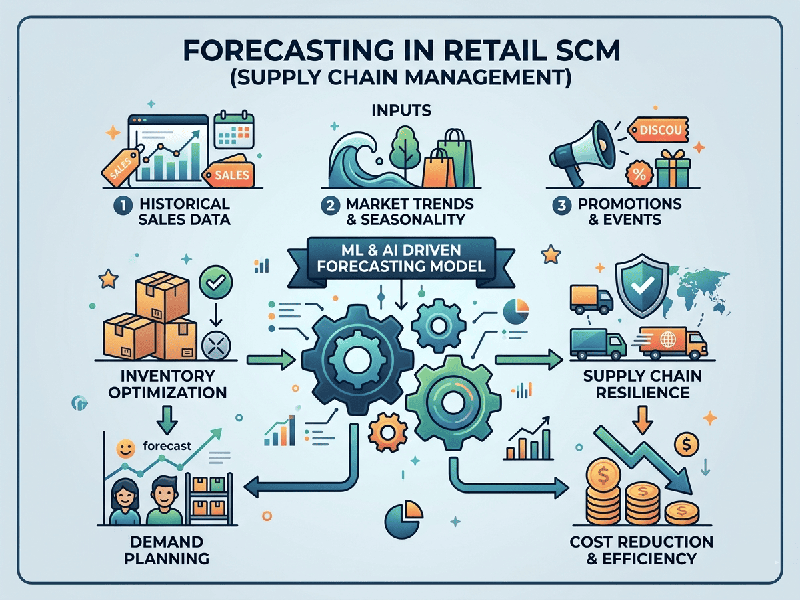
Forecasting in Retail SCM
Forecasting in Retail Supply Chain Management (SCM) is the
process of estimating future customer demand to optimize inventory levels,
reduce costs, and improve service levels. In 2026, this has evolved from simple
historical averaging to Predictive Demand Sensing powered by real-time
data.
·
Levels of Forecasting
To manage a retail supply chain effectively, forecasting
occurs at three distinct horizons:
- Strategic (Long-term): 1–5 years. Used for planning
new warehouse locations, factory capacities, and entering new regional
markets.
- Tactical (Medium-term): 3 months – 1 year. Focuses on
seasonal inventory planning, workforce scheduling, and contract
negotiations with logistics providers.
- Operational (Short-term): Days or weeks. Used for daily
replenishment, truck routing, and managing immediate stockouts.
·
Modern Forecasting Methodologies
Quantitative Models (Data-Driven)
- Time-Series Analysis: Uses historical sales data to
identify patterns like seasonality (e.g., peak sales during Diwali or
Black Friday) and trends (e.g., rising demand for organic products).
- Causal Models: Examines the relationship
between demand and external factors, such as price changes, marketing
campaigns, or competitor actions.
- Machine Learning (ML): Modern AI models analyze
thousands of variables simultaneously, including local weather patterns,
social media trends, and macroeconomic shifts (like RBI interest rate
changes).
Qualitative Models (Expert-Driven)
- Delphi Method: Gathering a consensus from a
panel of industry experts.
- Sales Force Composite: Using feedback from regional
sales managers who are closest to the end customer.