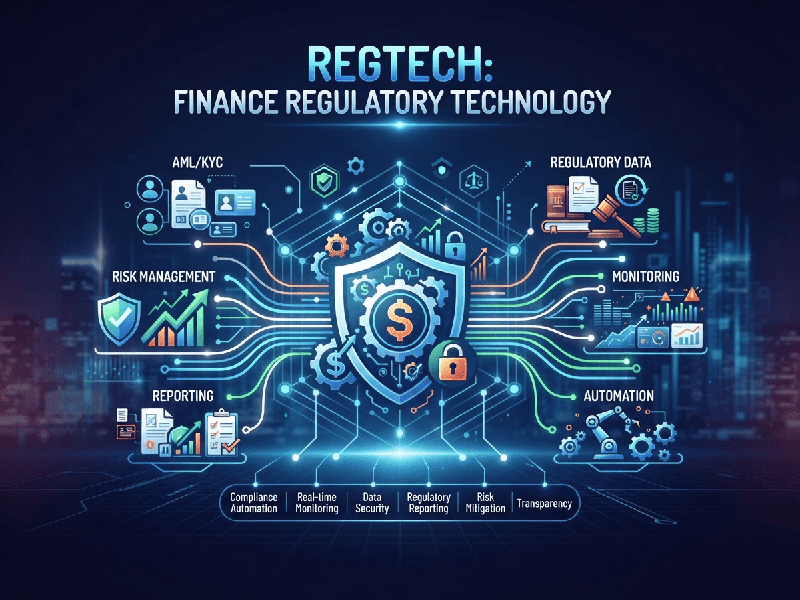
Finance Regulatory Tech (RegTech)
Financial Regulatory Technology (RegTech) refers to the use of advanced
software, artificial intelligence, cloud infrastructure, and data analytics to
help financial institutions automate regulatory compliance, manage risk, and
meet legal obligations more efficiently and cost-effectively.
Core Pillars & Solutions in RegTech
1. Anti-Money Laundering (AML) & Know Your
Customer (KYC)
- What it does: Automates customer onboarding
identity verification (IDV), biometric liveness detection, and screening
against global sanctions, politically exposed persons (PEPs), and adverse
media lists.
- Continuous Monitoring: Shifts from static, periodic
checks to perpetual KYC and real-time transaction surveillance to spot
anomalous transfer patterns or mule rings.
2. Regulatory Reporting
- What it does: Connects directly with core
banking and enterprise resource planning (ERP) systems to extract,
validate, and format financial data into standardized templates required
by regulatory bodies (such as RBI, SEBI, SEC, or global equivalents).
- Impact: Eliminates manual spreadsheet
tracking, minimizes human reporting errors, and streamlines electronic
filing submissions.
3. Risk Management & Governance
- What it does: Provides automated frameworks
for operational risk, stress testing, credit risk scoring, and policy
management.
- Dashboards: Gives compliance officers
unified views of risk exposure, audit-ready data pipelines, and automated
escalation paths for potential violations.
4. Fraud Prevention & Cybersecurity
- What it does: Utilizes machine learning and
graph analytics to map out complex relationship networks, detect
authorized push payment fraud, and ensure adherence to rigorous data
privacy rules (e.g., GDPR, regional data protection frameworks).