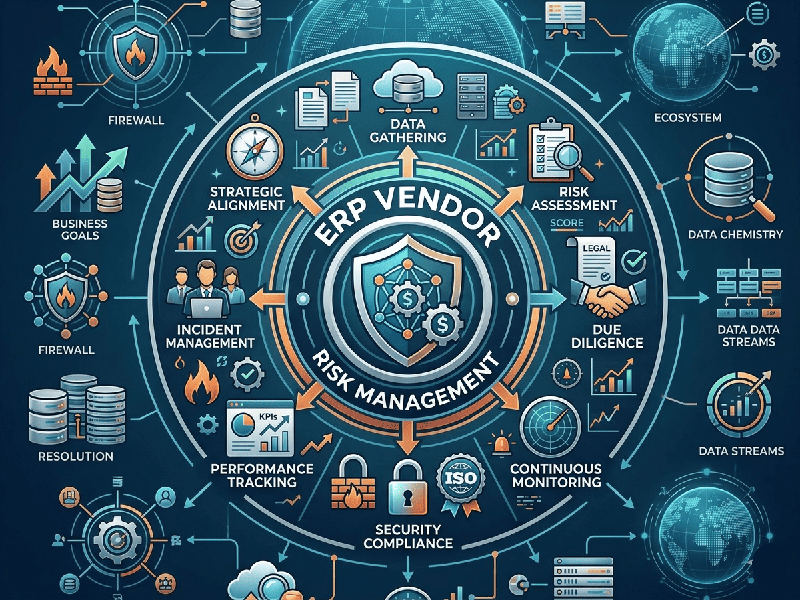
ERP Vendor Risk Management
ERP
(Enterprise Resource Planning) systems are no longer just software packages;
they are the central nervous system of a business. Because these systems
integrate finance, supply chain, and HR data, Vendor Risk Management (VRM)
has moved from a periodic "check-the-box" activity to a continuous,
real-time security requirement.
The ERP
Risk Landscape
When
evaluating or managing an ERP vendor, risks are generally categorized into four
pillars:
- Operational Risk: The danger of
"downtime." If the ERP goes dark, production, shipping, and
billing stop instantly.
- Security & Data Risk: ERPs are "honey pots"
for cybercriminals because they contain intellectual property, employee
records, and banking details.
- Compliance & Legal Risk: Risks related to how the vendor
handles data residency (e.g., GDPR, India’s DPDP Act) and whether they
meet industry-specific standards like SOC2 or ISO 27001.
- Financial & Strategic Risk: The risk that the vendor goes
bankrupt, is acquired by a competitor, or "sunsets"
(discontinues) the specific module your business relies on.
Critical
VRM Strategies for 2026
1.
Continuous Monitoring (Beyond the Annual Audit)
Static
spreadsheets are obsolete. Modern VRM uses automated tools to monitor vendor
health 24/7.
- Security Ratings: Real-time feeds that alert you
if the vendor’s domain is found on the dark web or if they have unpatched
vulnerabilities.
- Financial Health Alerts: Monitoring news and credit
filings to catch early signs of a vendor’s fiscal instability.
2. The
"Right to Audit" & Exit Strategies
Contractual
protections are your primary defense.
- Data Portability: Ensure the contract defines
exactly how you get your data back (and in what format) if you leave. In
2026, "Vendor Lock-in" is the highest strategic risk.
- Escrow Agreements: For on-premise or hybrid ERPs,
an independent third party should hold the source code. If the vendor goes
out of business, you get access to the code to keep your system running.
3.
Fourth-Party Risk Management
Your ERP
vendor uses other vendors.
- The Chain of Trust: You must assess the
"sub-processors." If your ERP vendor is secure but their cloud
hosting provider has a breach, your data is still compromised.