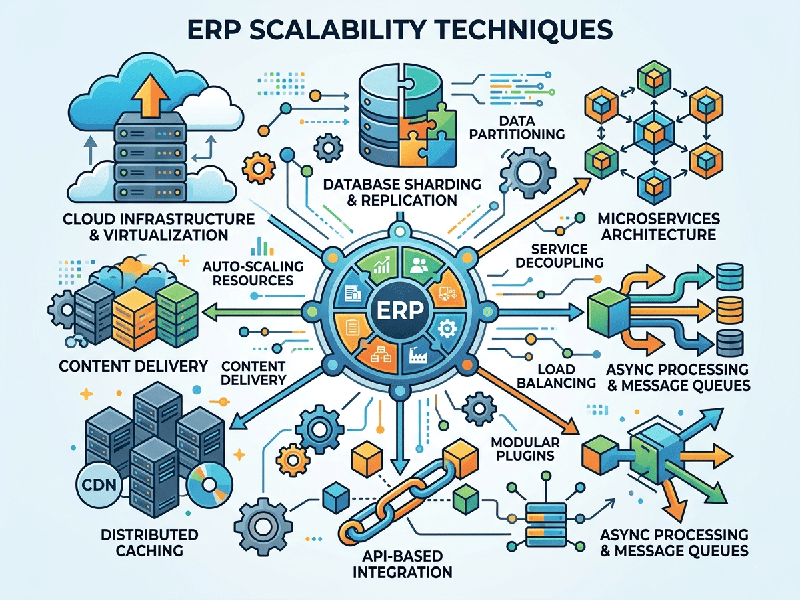
ERP Scalability Techniques
Scalability in Enterprise Resource Planning (ERP) systems is
the ability to handle an increasing volume of users, transactions, and data
without a degradation in performance. As businesses grow, their ERP must
transition from a static tool to a dynamic infrastructure.
1. Technical Scalability Techniques
These focus on the underlying architecture and how the system
manages hardware and software resources.
- Microservices Architecture: Instead of a single
"monolithic" codebase, the ERP is broken into independent
services (e.g., Finance, HR, Inventory). This allows you to scale the
"Inventory" module during a peak sale season without needing to
scale the "HR" module.
- Horizontal vs. Vertical Scaling:
o Vertical (Scaling Up): Adding more power (CPU, RAM) to your
existing server. This has a physical ceiling.
o Horizontal (Scaling Out): Adding more servers to a cluster.
This is the preferred method for modern cloud ERPs to handle unlimited growth.
- Database Sharding: This involves breaking a large
database into smaller, faster, more easily managed parts called
"shards." For example, data can be sharded by geographical
region or fiscal year to prevent a single database from becoming a
bottleneck.
- Asynchronous Processing: Moving heavy tasks (like
generating year-end reports or bulk payroll) to background
"queues." This ensures the user interface remains snappy and
responsive while the heavy lifting happens elsewhere.
2. Functional & Business Scalability
Scalability isn't just about servers; it’s about how the
software adapts to new business complexities.
- Multi-Tenancy: A single instance of the
software serves multiple "tenants" (departments or subsidiary
companies). This allows a parent company to onboard a new acquisition in
days rather than months.
- Global Compliance Engines: Scalable ERPs use
"localization" layers. As you expand into new countries, the
system automatically adjusts for local tax laws (like GST in India),
currencies, and language requirements without requiring a new software
installation.
- Elastic Resource Provisioning: Using cloud-native features to "auto-scale." The system detects a spike in traffic and automatically spins up more computing power, then "shrinks" back down during quiet periods to save costs.