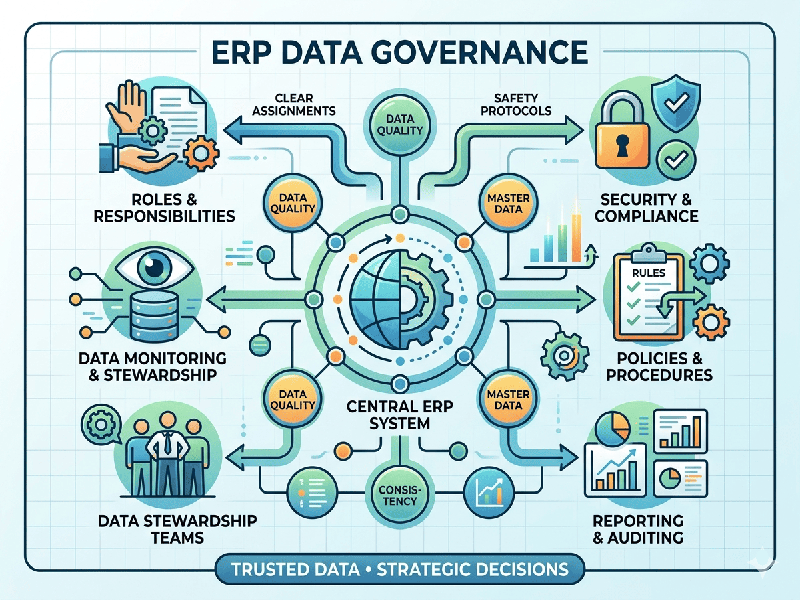
ERP Data Governance
ERP (Enterprise Resource Planning) Data Governance is the
framework of people, processes, and technology used to ensure that the data
within an ERP system is accurate, secure, and usable. In a massive system like
SAP, Oracle, or Microsoft Dynamics, data is the "fuel"—if the fuel is
dirty (duplicate entries, wrong currency, outdated addresses), the entire
business engine stalls.
Effective governance ensures that a "Customer" or
"Vendor" is defined the same way in the finance module as they are in
the shipping and sales modules.
1. The Core Pillars of ERP Governance
To build a sustainable framework, you need to address these
four areas:
- Data Quality: Establishing rules for
accuracy, completeness, and consistency. For example, ensuring all Indian
GST numbers follow the correct 15-digit alphanumeric format.
- Data Ownership: Assigning "Data
Stewards" (department experts) who are responsible for specific data
sets (e.g., the HR Manager "owns" employee data).
- Data Security & Privacy: Controlling who can see or edit
sensitive information, ensuring compliance with regulations like the Digital
Personal Data Protection Act (DPDP) in India.
- Master Data Management (MDM): Creating a single "Source
of Truth" for core business entities like Products, Vendors, and
Employees to prevent duplicates across different branches.
2. The Data Lifecycle Management
Data in an ERP isn't static; it follows a journey. Governance
must cover every step:
1.
Creation:
Standardized forms and mandatory fields to prevent "junk" data from
entering the system.
2.
Storage:
Defining how long data is kept (e.g., keeping financial records for 7 years for
tax audits) and when it is archived.
3.
Usage:
Ensuring that reports and AI dashboards are pulling from the correct, updated
tables.
4.
Archiving/Deletion: Safely removing old data to maintain system speed and reduce storage
costs.