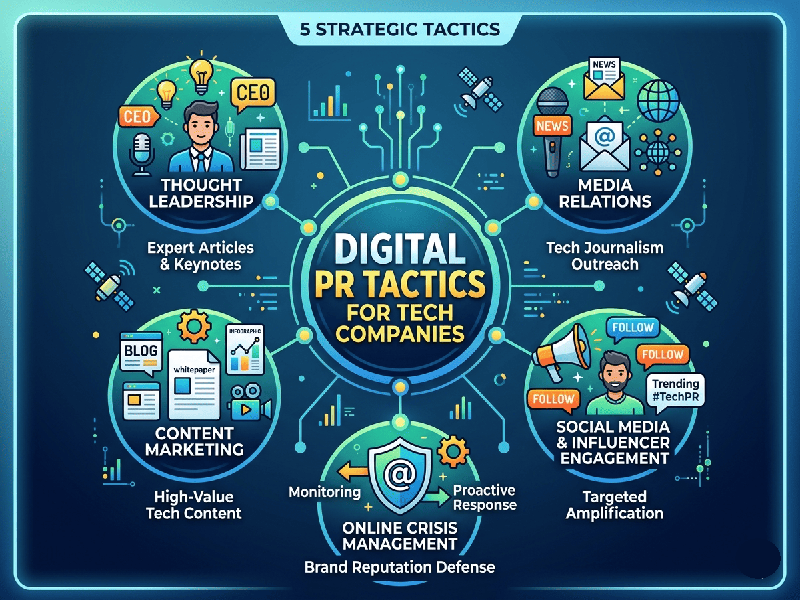
Digital PR Tactics for Tech Companies
Digital PR for tech companies has evolved far beyond the
traditional blast-and-pray press release. The massive transformation in how
people find information online means tech buyers aren't just reading industry
magazines; they are asking LLMs for vendor recommendations, digging through
Reddit for brutal product feedback, and looking for authoritative, data-backed
insights.
A modern digital PR strategy must achieve two parallel goals:
winning trust from human decision-makers and earning AI citability
across generative search summaries.
1. Proprietary Data Storytelling (The "Magnet"
Asset)
Tech companies sit on mountains of unique data. Packaging
this data into an annual trend report or a quarterly index is the single most
effective way to earn authoritative backlinks and media citations.
- The Approach: Look at your platform usage
logs, transaction metadata, or specialized survey panels to pull unique
industry benchmarks.
- The Angle: Don't just show data; present a
counter-intuitive narrative. For instance, a cybersecurity firm shouldn't
just publish "Ransomware is up." Instead, frame it as: "Why
64% of Mid-Market CISOs Are Quietly Cutting Their Threat Detection
Budgets."
- The Distribution: Build a dedicated, clean
interactive hub on your site. Package bite-sized data charts and
infographics that journalists can copy and paste directly into their
articles with clear attribution.
2. Generative Engine Optimization (GEO) via Earned Media
When a CTO asks an AI engine, "What are the top
enterprise supply chain automation tools?", that engine pulls answers
from a select group of highly cited tech publications, forums, and developer
hubs.
- Mapping the Sources: Identify the niche trade blogs,
technical hubs, and major enterprise tech sites (like TechCrunch,
VentureBeat, CIO, or InfoQ) that AI engines frequently use as source
material for your specific sector.
- Targeted Inclusion: Pitch highly technical,
objective thought leadership articles or guest columns to these specific
domains.
- Structured Formatting: Ensure your online newsroom and
guest pieces use clean header hierarchies, clear tables, and data lists.
If the text is easy for a human to read, it is easy for an AI web-crawler
to extract, cite, and attribute back to your brand.
3. High-Context "Newsjacking"
Journalists covering fast-moving tech sectors face extreme
pressure to provide rapid, expert context when a major event breaks (e.g., a
massive data breach, a sudden cloud outage, or an unexpected regulatory policy
shift).
- The Protocol: Set up real-time social
listening and media tracking alerts for your executive team’s key subject
areas.
- The Execution: Within two hours of a breaking
news event, email a personalized, 4-line quote from your technical founder
or CISO directly to the reporters covering the beat.
- The Rule: Avoid sales pitches. Provide an
objective, highly technical explanation of why the event happened
and what it means for the industry. This builds long-term reporter
relationships, establishing your team as the definitive go-to source.