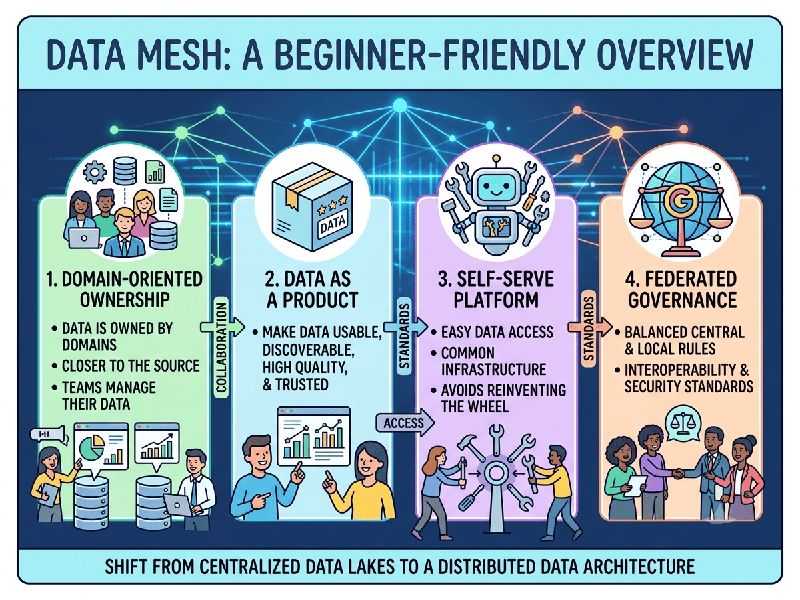
Data Mesh: A Beginner-Friendly Overview
What is Data Mesh?
At its core, Data Mesh is a modern approach to
data architecture that moves away from a central, monolithic data platform
toward a decentralized model.
Instead of having one big team manage all the data for
an entire organization (which often becomes a bottleneck), Data Mesh empowers
individual business domains (like Marketing, Sales, or Inventory) to take
ownership of their own data as a product.
The 4 Core Principles
Data Mesh is defined by four fundamental pillars that
distinguish it from traditional data warehouses or data lakes:
1.
Domain-Oriented Ownership: Data is owned by the teams that know it best. The team
creating the data (e.g., the Checkout team) is responsible for ensuring its
quality and accessibility.
2.
Data as a Product: Data isn't just a byproduct; it is a product. Domains must treat their
data like a consumer product, ensuring it is discoverable, addressable,
trustworthy, and easy to use for other teams.
3.
Self-Serve Data Platform: To keep decentralized teams from struggling with
infrastructure, a central platform team provides the tools and
"pipes" that make it easy for any domain to host, process, and share
data.
4.
Federated Computational Governance: While teams have autonomy, they must follow common
standards (like security protocols and data formats) to ensure that data
remains interoperable across the whole organization.