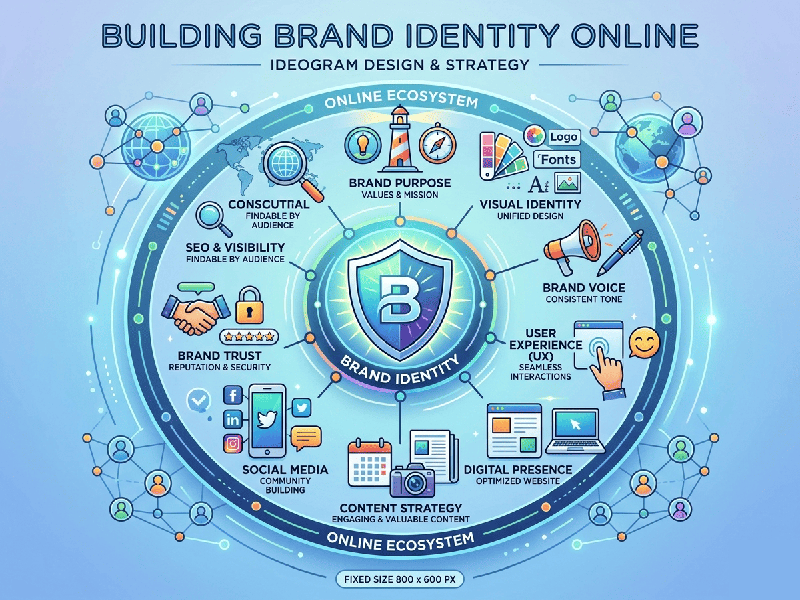
Brand Identity Online
building a brand identity online has moved beyond just having
a logo and a website. It is now about creating a cohesive digital ecosystem
that communicates trust, authority, and personality across every touchpoint.
A strong brand identity ensures that whether a user finds you
on a B2B directory, a social media platform, or a professional blog, the
experience feels consistent.
1. The Core Visual Language
Visuals are the "face" of your brand. In a
professional or industrial context, minimalism often communicates reliability.
- Logo & Typography: Use clean, scalable vector
logos. Stick to a primary palette of 2–3 colors to maintain a professional
"corporate" feel.
- Iconography: Use consistent icons (e.g.,
swapping standard currency symbols for local ones like ₹ where
applicable) to show regional relevance and attention to detail.
- Professional Imagery: Move away from generic stock
photos. High-quality, minimalist graphics—such as custom-designed diagrams
for complex topics like logistics or supply chains—help establish you as
an expert.
2. Strategic Content Pillars
Your brand is defined by what you talk about. To build
authority, focus on specific "pillars" of expertise.
- Educational Authority: Create deep-dive guides,
whitepapers, or "how-to" series (e.g., navigating international
certifications like ISO or CE).
- Market Insight: Share trends for the current
year, such as "Digital Transformation in 2026," to show that
your brand is forward-thinking.
- Transparency: Clearly document your
processes. For a service-based brand, this might include step-by-step
registration guides or profile optimization tips.
3. Optimizing the "Digital Storefront"
Your brand identity lives on platforms you don't own just as
much as on your website.
- B2B & Directory Presence: On platforms like LinkedIn or
industry-specific directories, your "Brand Identity" is your Profile
Completeness. A fully optimized profile with a clear value proposition
acts as a trust signal for global buyers.
- SEO as Brand Trust: Appearing at the top of search
results for specific industry keywords is a "passive" form of
brand identity. It tells the user, "The industry trusts this brand,
and so should you."
4. Voice and Tone
How you speak is as important as what you say.
- The "Expert Peer"
Tone: In B2B
and professional circles, aim for a voice that is knowledgeable yet
accessible. Avoid overly dense jargon; instead, use clear, SEO-optimized
language that solves a specific problem.
- Consistency: Whether it’s a meta description
or a 2,000-word blog post, the tone should remain steady—helpful,
professional, and direct.