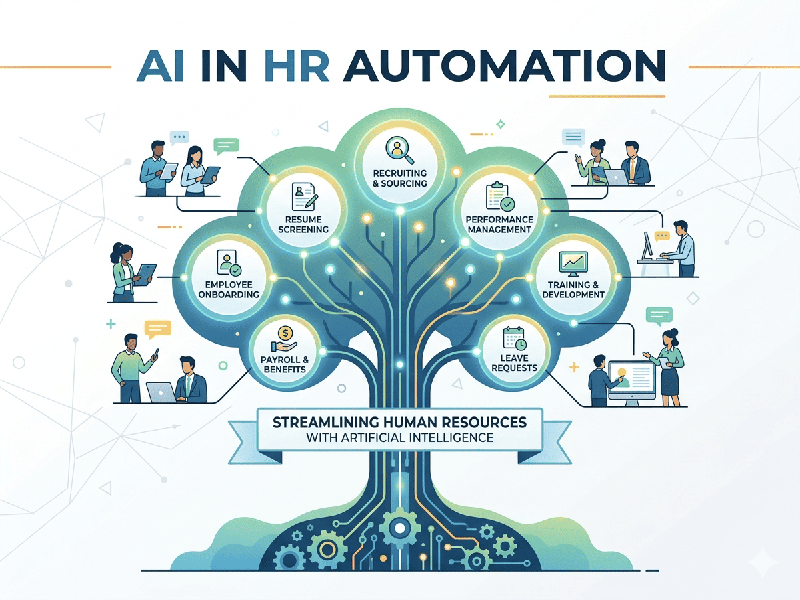
AI in HR Automation
AI in HR Automation has shifted from experimental chatbots to "Agentic
AI"—autonomous digital teammates that don't just follow rules but execute
complex workflows, from proactive talent sourcing to personalized employee
growth plans.
The focus is now on Human-AI Collaboration, where AI
handles the data-heavy orchestration while HR professionals pivot toward
culture, empathy, and strategic decision-making.
1. Key Pillars of AI HR Automation in 2026
- Agentic Talent Acquisition: Unlike basic filters, AI agents
now act as "Sourcing Partners." They scan internal and external
databases 24/7, conduct asynchronous intake meetings with managers to
define roles, and even initiate personalized outreach to passive
candidates.
- Hyper-Personalized Employee
Experience: AI
creates a "Netflix-style" experience for workers. It suggests
specific learning modules based on their skill gaps, predicts burnout by
analyzing engagement signals, and provides instant, 24/7 support for
70–80% of routine HR queries.
- Predictive People Analytics: Instead of looking at why
people left, AI now forecasts Retention Risks and Workforce
Needs. It identifies which departments will need more staff six months
in advance based on market trends and internal project pipelines.
- Continuous Performance
Management: The
annual review is being replaced by real-time sentiment analysis and
feedback loops. AI aggregates data from daily workflows to provide
managers with objective insights for fairer, data-driven coaching.
2. Impact on HR Roles
The "Human-AI Power Couple" model has redefined
what it means to be an HR professional:
- From Admin to Architect: HR leaders are now the
architects of human-machine environments, managing both human staff and
digital AI agents.
- Critical Thinking >
Prompting:
While anyone can learn to use AI, the most valued skill in 2026 is Critical
Thinking—the ability to spot flawed AI output and apply human judgment
where the machine lacks context.
3. Implementation Checklist for 2026
1.
Data Readiness Audit: Ensure your HR data is structured and clean; AI is only as good as the
data it learns from.
2.
AI Literacy Training: Upskill the HR team not just on "how to use" tools, but on the
ethics and limitations of AI.
3.
Vendor Validation: Move beyond marketing claims; ask vendors for specific evidence of bias
reduction and compliance with local labor laws.
4.
Change Management: Communicate clearly with employees about how AI is being used to support
them, not replace them, to build trust.