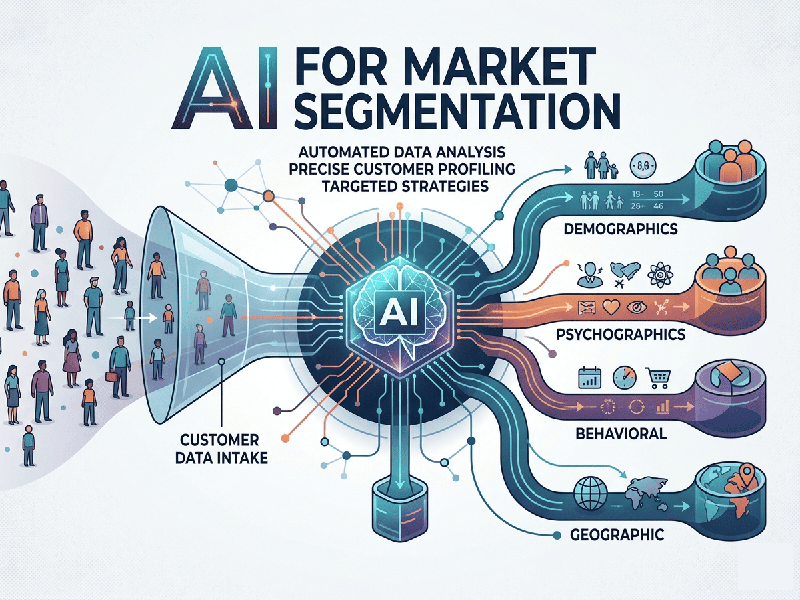
AI for Market Segmentation
AI has transformed market segmentation from a static, manual process into a dynamic, real-time "agentic" system. Instead of grouping customers by broad demographics like age or location, AI focuses on micro-segments—groups defined by specific behavioral signals, intent, and lifecycle stages.
1. Static vs. Dynamic Segmentation
The biggest shift is the move from "snapshots" to
"continuous intelligence."
- Traditional (2024 & Prior): Marketers created segments once
a month (e.g., "Males 25–34 in Mumbai"). These lists quickly
became outdated as user interests shifted.
- AI-Driven (2026): Segmentation is continuous.
Autonomous AI agents analyze live streams of data—browsing habits,
transaction history, and even sentiment from social media—to move users in
and out of segments instantly.
2. Key AI Segmentation Techniques
Behavioral Micro-Segmentation
AI identifies patterns human analysts might miss. For
example, it might find a high-value segment of "users who view product
pages for 3+ minutes, return within 48 hours, and engage with educational
content," regardless of their age or income.
- Impact: Brands see up to 40% higher
ROI on paid campaigns when targeting by behavior rather than
demographics.
Predictive Lifecycle Modeling
Instead of looking at what a customer did, AI predicts
what they will do.
- Propensity Modeling: Predicts the likelihood of a
customer making a purchase, upgrading a plan, or churning within the next
30 days.
- CLV Prediction: AI estimates the Customer
Lifetime Value of a new lead on day one, allowing marketing teams to
allocate higher budgets toward "future whales."
Generative Persona Creation
AI can take unstructured data (like customer support
transcripts or reviews) and generate "Synthetic Personas." These are
detailed, data-backed profiles that help creative teams tailor messaging to a
segment's specific pain points and emotional triggers.