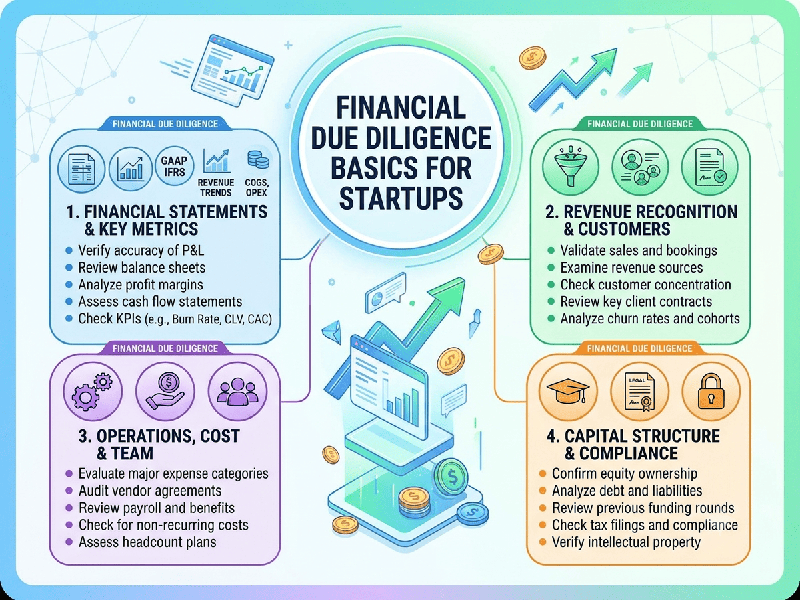
Financial Due Diligence Basics for Startups
Financial due diligence (FDD) for startups is the
rigorous verification process investors use to confirm that a company's
financial health, unit economics, and operational metrics match what was
pitched. Unlike a standard statutory audit—which checks historical
compliance—FDD focuses on quality of earnings, cash runway, and future
scalability.
Common Red Flags That Stall Deals
Commingled Funds: Mixing personal founder expenses with company bank
accounts or credit cards.
Improper Revenue Recognition: Booking annual upfront contracts or
unfulfilled orders as immediate monthly revenue instead of deferred revenue.
Unreconciled Records: Discrepancies between internal
management accounts (MIS), bank statements, and filed tax returns.
Unaccounted Dilution: Outdated cap tables that omit
promised ESOP pools, advisor shares, or unconverted SAFEs/notes.
Statutory Non-Compliance: Missing tax filings, late payroll
withholdings, or unaddressed regulatory notices.
Essential Preparation Checklist
Clean Up the Cap Table: Ensure every share class, option
grant, SAFE, and convertible note is updated and matches legal agreements.
Standardize Accounting: Transition from cash-basis to
accrual-basis accounting early so revenue and expenses match the periods in
which they occur.
Reconcile Tax & Bank Filings: Verify that bank balances, accounting
software ledgers, and tax filings match down to the exact figure.
Document Model Assumptions: Keep a clear tab in your financial
model explaining the logic behind conversion rates, churn, pricing tiers, and
headcount growth.