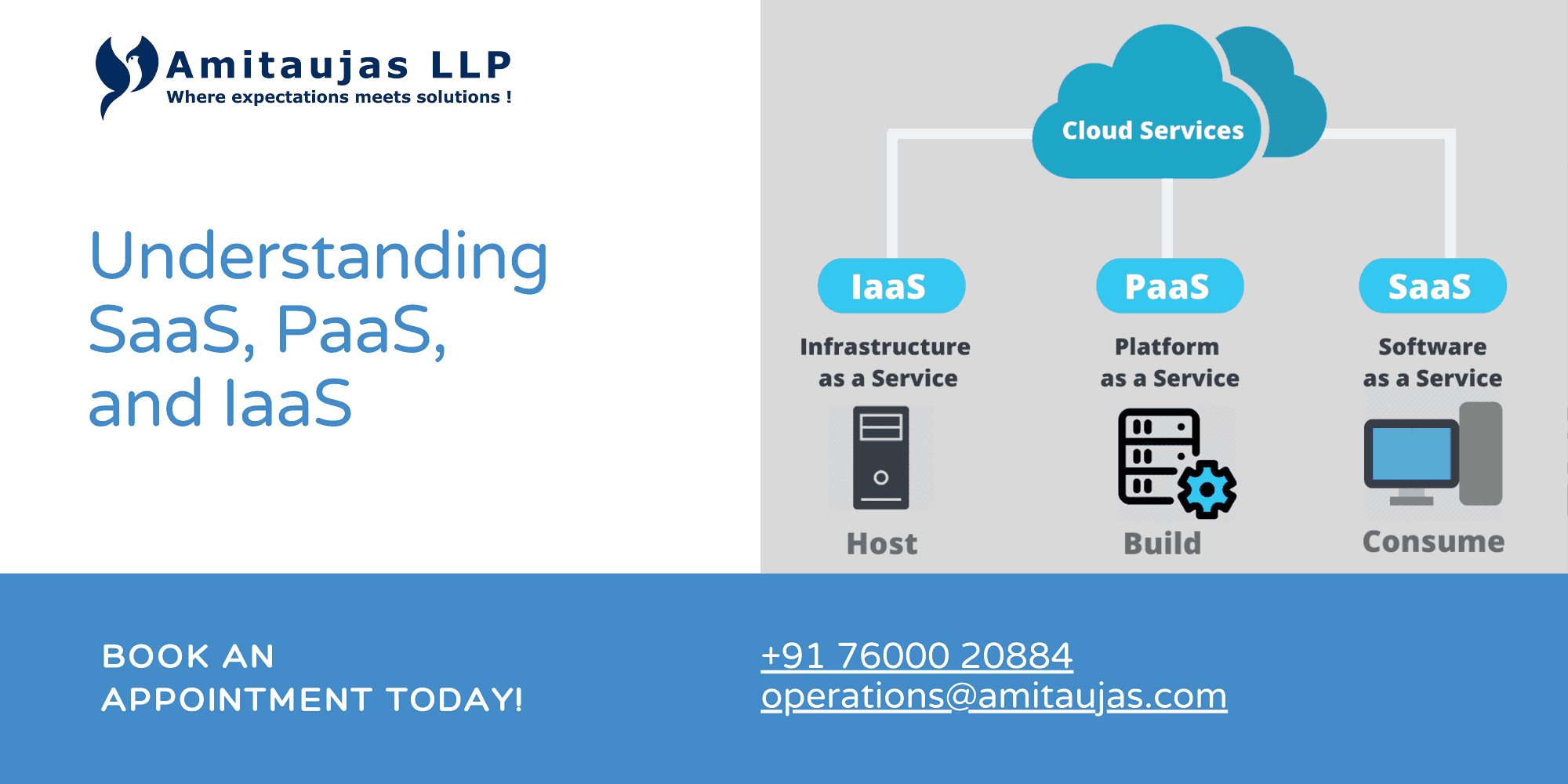
Understanding the different cloud computing service models—SaaS, PaaS, and IaaS—is important for businesses looking to make the most of cloud technologies. Here is an overview of each model:
1. Software as a Service (SaaS)
Definition: SaaS delivers software applications over the Internet on a subscription basis. Users access these applications through a web browser without installing or maintaining them on their devices.
Examples: Google Workspace, Microsoft 365, Salesforce, Slack.
Advantages:
- Access: Users can access applications from anywhere with an Internet connection.
- Automatic updates: Customers manage software updates and maintenance.
- Cost effective: Reduces the need for equipment and internal infrastructure.
- Good for: Businesses looking for turnkey applications without the need for extensive IT support.
2. Platform as a Service (PaaS)
Definition: PaaS provides a cloud-based platform that allows developers to build, deploy, and manage applications without worrying about the underlying infrastructure. It includes tools and services for development, testing, and deployment.
Examples: Google App Engine, Microsoft Azure App Services, Heroku.
Benefits:
- Simplified Development: Developers can focus on writing code instead of managing hardware and software infrastructure.
- Collaboration: Supports team collaboration with integrated development tools.
- Scalability: Scale applications as needed without managing the underlying infrastructure.
- Good for: Development teams looking for a robust environment to efficiently build and manage applications.
3. Infrastructure as a Service (IaaS)
Definition: IaaS provides virtual data resources over the Internet, such as servers, storage, and networks. Users can rent IT infrastructure and manage it as they wish.
Examples: Amazon Web Services (AWS), Microsoft Azure, Google Cloud Platform.
Advantages:
- Flexibility and control: Users have full control over their infrastructure, which can be adapted to meet specific needs.
- Cost effective: Reduces the capital cost of physical equipment with a pay-as-you-go model.
- Increase: Increase or decrease resources as needed.
- Good for: Organizations that want to manage their own infrastructure but want to avoid the cost and complexity of physical hardware.