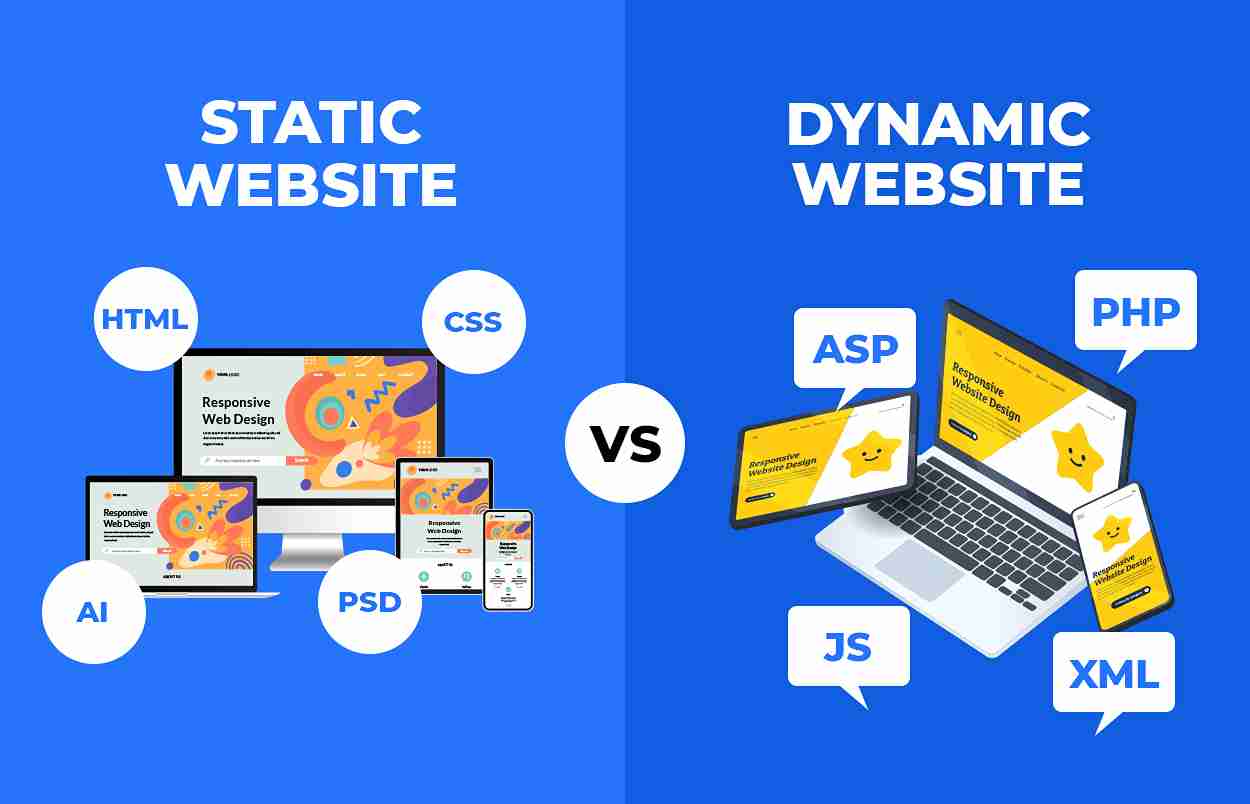
Static vs. Dynamic Websites
| Comparison of Static vs. Dynamic Websites for Manufacturing Companies.
|
| Sr. No | Criteria | Static Website | Dynamic Website |
|---|---|---|---|
| 1 | Cost | Generally, less expensive to develop and maintain. | Typically, more expensive to develop due to complexity. |
| Limited features; additional costs for future updates or enhancements. | Investment leads to long-term value with flexible features | ||
| 2 | Load Times | Faster load times as content is pre-rendered and delivered directly from the server. | Slower load times due to server-side processing, especially with heavy content or databases. |
| Limited ability to optimize load times with advanced techniques. | Load times can be optimized with caching and other performance enhancements | ||
| 3 | Security | Enhanced security with no backend database, reducing vulnerability to attacks. | More components mean a higher risk of security breaches. Requires regular updates and monitoring. |
| Security risks are lower, but limited protection options for evolving threats. | Security can be enhanced with proper measures like SSL, firewalls, and regular updates. | ||
| 4 | Functionality | Limited interactivity and advanced features; suitable for basic informational sites. | Supports complex functionalities like e-commerce, user login, and content management. |
| Simple and straightforward, with less chance for technical issues. | Increased complexity can lead to more frequent technical issues. | ||
| 5 | Content Management | Requires technical skills or developer support for content updates. | Easily update content through a user-friendly CMS without needing technical expertise. |
| Content is stable and less likely to be accidentally altered. | Regular updates may require training or adaptation to new CMS features. | ||
| 6 | Scalability | Not easily scalable; adding new features, pages, or sections can be difficult and costly. | Highly scalable; can grow and evolve with your business, accommodating new content and features. |
| Works well for businesses with a static product or service offering. | Initial setup may be more complex, but it supports long-term growth and expansion. | ||
| 7 | User Experience | Basic user experience; lacks advanced features and personalization options. | Offers an enhanced and personalized user experience, keeping visitors engaged. |
| Simple navigation and quick access to information. | If not optimized, the dynamic experience may lead to slower interactions. | ||
| 8 | SEO & Marketing | Limited ability to perform SEO; fewer opportunities for content marketing and updates. | Dynamic content can be easily optimized for search engines, helping to improve visibility. |
| Static content is easily crawled by search engines, which can benefit certain types of SEO. | Requires regular SEO updates to maintain ranking due to dynamic content changes. | ||
| 9 | Content Freshness | Content tends to be static and outdated unless manually updated. | Content can be dynamically updated, providing freshness and relevance to visitors. |
| Content is consistent and unchanging, which can be beneficial for certain information. | Frequent updates may require a dedicated content strategy. | ||
| 10 | Target Audience | May not fully engage tech-savvy or younger audiences who expect interactivity. | Appeals to a broader audience with diverse content needs and preferences. |
| Suitable for audiences looking for quick information without needing interaction. | Complex features may be overwhelming for audiences seeking straightforward content. |