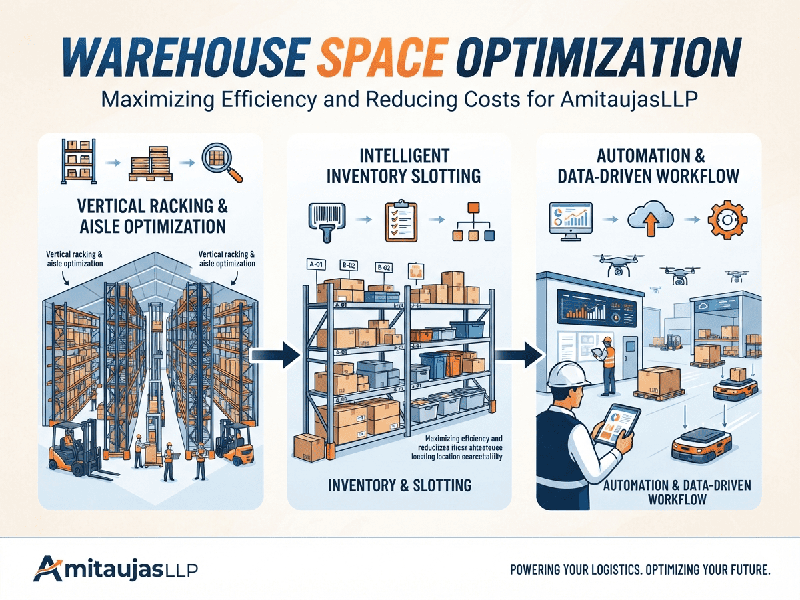
Warehouse Space Optimization
Warehouse space optimization is the process of
maximizing the utility of vertical and horizontal storage capacity,
streamlining inventory placement, and accelerating fulfillment workflows. In
modern supply chain and logistics operations, effective space optimization
directly reduces holding costs, minimizes travel time, and increases overall
throughput capacity.
1. Vertical Space Maximization (Cubing the Facility)
- High-Bay Racking &
Mezzanines:
Look upward rather than outward. Install high-bay racking systems and
vertical lift modules (VLMs) to fully utilize vertical cubic feet,
supplemented by multi-tier mezzanines for manual picking operations.
- Vertical Clearance Alignment: Ensure that inventory profiles,
pallet heights, and racking levels are calibrated to match building height
restrictions while complying strictly with local fire safety and sprinkler
clearance codes.
2. Intelligent Slotting & Inventory Layout
- Velocity-Based Slotting: Position high-velocity
(fast-moving) SKUs closest to the shipping docks and packing stations in
easily accessible "golden zones" (waist-to-chest height) to
drastically reduce picker travel time.
- Dynamic & Random Storage: Implement dynamic slotting via
your Warehouse Management System (WMS) rather than fixed locations,
allowing incoming stock to occupy any available optimal slot based on
real-time demand patterns.
- SKU Grouping & Affinity
Analysis: Group
frequently co-ordered items together in adjacent bins to enable efficient
batch or zone picking.
3. Aisle and Path Optimization
- Narrow & Very Narrow Aisle
(VNA) Systems:
Transition from standard wide aisles to narrow or VNA configurations where
facility footprint is limited, utilizing specialized turret trucks or
wire-guided fork-lifts to maximize storage density.
- Unidirectional Flow Design: Establish clear, one-way
traffic patterns for both personnel and material handling equipment to
eliminate bottlenecks, reduce congestion, and improve workplace safety.
4. Dynamic Space Reclamation & Inventory Control
- Just-In-Time (JIT) & Lean
Principles:
Partner with suppliers to align inbound shipments closer to actual
production or demand schedules, minimizing the volume of safety stock
sitting stagnant on racks.
- Dead Stock & Sluggish SKU
Audits:
Regularly identify, discount, or liquidate dead stock, obsolete inventory,
or damaged goods that occupy prime real estate without generating
turnover.
- Cross-Docking Integration: Utilize cross-docking workflows
where applicable—transferring goods directly from inbound receiving docks
to outbound shipping vehicles without intermediate put-away and storage
steps.