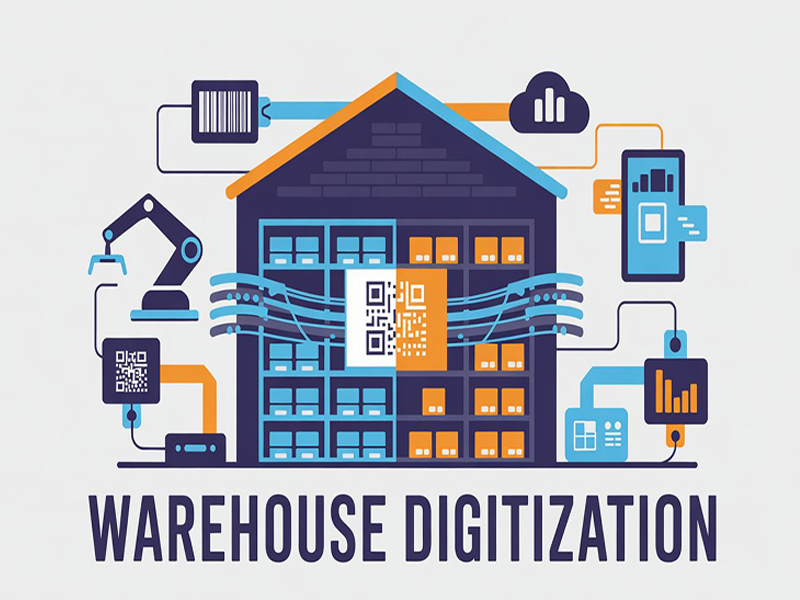
Warehouse Digitization
Warehouse
digitization is the transformation of traditional, manual warehouse operations
into an integrated, data-driven ecosystem by converting analog information into
digital formats. This process leverages emerging technologies like the Internet
of Things (IoT), artificial intelligence (AI), and robotics to automate manual
tasks and provide real-time visibility across the supply chain.
Technologies Driving Digitization
- Warehouse Management Systems
(WMS): Acts
as the "digital brain," coordinating receiving, inventory
tracking, picking, and shipping from a centralized platform.
- Internet of Things (IoT): A network of smart sensors
that monitor real-time location, temperature, humidity, and equipment
health.
- Robotics & Automation: Includes Autonomous
Guided Vehicles (AGVs) and robotic arms for picking and sorting,
reducing reliance on manual labor.
- Artificial Intelligence (AI): Uses predictive analytics
to forecast demand, optimize inventory levels, and calculate the most
efficient picking routes.
- Digital Twins: Virtual replicas of the
warehouse used to simulate layout changes and volume increases to predict
potential bottlenecks.
- Wearable Technology: Devices like smart glasses
and handheld scanners that give workers instant access to data on the
move.
Core
Benefits
- Increased Efficiency &
Speed: Automation
of repetitive tasks like data entry and picking significantly boosts
throughput.
- Improved Accuracy: Digitized systems like
barcode and RFID scanning eliminate manual errors in inventory counts and
order fulfillment.
- Enhanced Visibility: Real-time dashboards
provide a complete overview of stock levels, order status, and asset
movement, helping to prevent stockouts.
- Cost Reduction: Labor costs are lowered
through automation, and storage costs decrease as space is optimized.
- Scalability: Digital systems easily
adapt to rapid business growth or seasonal demand fluctuations compared to
rigid analog processes.
- Sustainability: Reducing paper-based
tracking and optimizing energy use through smart climate control supports
greener operations.
Implementation
Challenges
- High Initial Investment: Upfront costs for hardware
and software can be a barrier, particularly for smaller enterprises.
- Legacy System Integration: Connecting modern digital
tools with existing, older IT infrastructure is often complex.
- Workforce Adaptation: Employees may require
extensive training or upskilling to operate new technologies.
- Cybersecurity: As warehouses become more
connected, protecting sensitive operational and customer data from
breaches becomes critical.