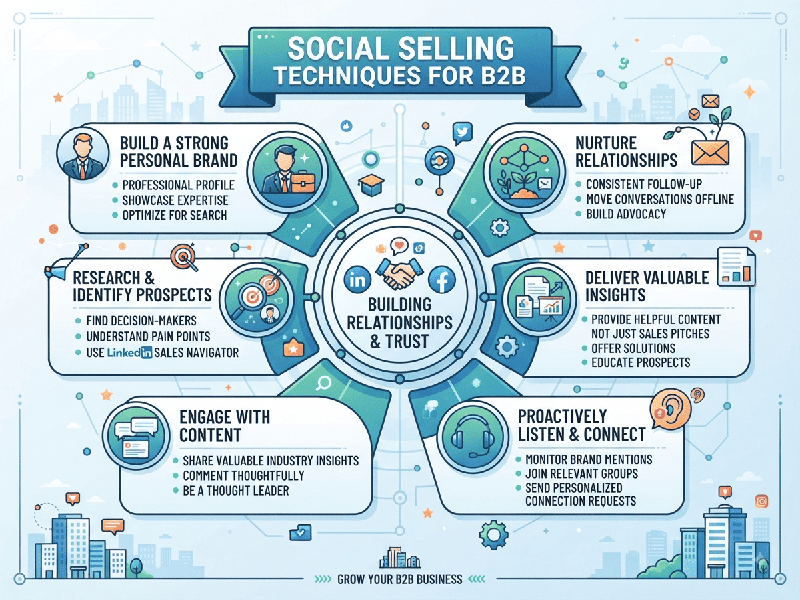
Social Selling Techniques for B2B
1. Core Principles of B2B Social Selling
- Relationship-First Approach: Shift the focus from immediate
pitching to building genuine, trust-based relationships with
decision-makers over time.
- Value-Driven Engagement: Consistently share insights,
industry research, and problem-solving content rather than promotional
brochures.
- Personalization at Scale: Tailor connection requests,
direct messages, and content comments to the specific pain points and
business goals of your target accounts.
- Social Listening: Monitor industry conversations,
competitor mentions, and buyer signals to identify timely opportunities
for engagement.
2. Key B2B Social Selling Best Practices
Optimize Your Professional Profiles as Landing Pages
- Transform your personal and
company profiles (LinkedIn, X, etc.) from static digital resumes into
client-centric landing pages.
- Write compelling headlines that
clearly state who you help, the problems you solve, and the measurable
value you deliver.
- Feature high-value resources,
case studies, or whitepapers directly in your profile's featured section.
Leverage Account-Based Social Selling (ABSS)
- Coordinate with your sales and
marketing teams to map out key target accounts and identify multiple
stakeholders within those organizations (e.g., end-users, influencers, and
economic buyers).
- Engage with content published by
these specific stakeholders across multiple channels to build familiar,
trusted name recognition before initiating direct outreach.
Share Thought Leadership and Industry Insights
- Publish original content, trend
analysis, and practical how-tos that address complex operational or
strategic challenges in your niche.
- Utilize diverse formats—such as
data-driven infographics, short video breakdowns, and structured text
posts—to capture attention and drive meaningful discussions in the
comments.
Master the Art of Soft Outreach and Warm Networking
- Avoid pitching immediately after
a connection request is accepted. Instead, thank them for connecting,
share a relevant piece of research, or ask an insightful question about
their industry.
- Engage thoughtfully on a
prospect's posts (leaving substantive comments rather than generic praise
like "Great post!") to stay top-of-mind organically.
Utilize Social Listening and Intent Triggers
- Track key buying signals such as
executive job changes, company expansions, funding announcements, or
public queries about specific industry challenges.
- Reach out with a customized,
helpful message tied directly to that trigger event (e.g., congratulating
a newly appointed leader or sharing relevant compliance insights when
regulations shift).