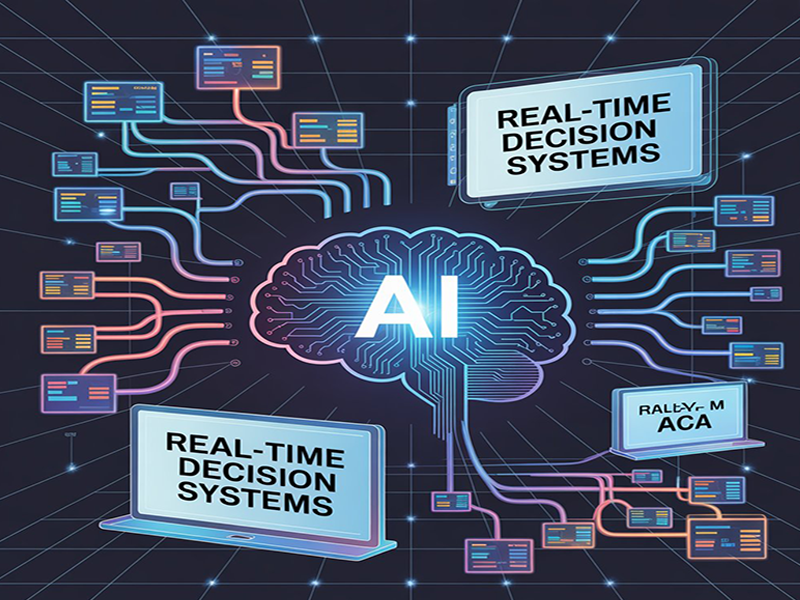
Real-Time AI Decision Systems
Real-time AI
decision systems in 2026 represent a shift from traditional,
batch-oriented data processing to "agentic" and "temporal"
AI that acts on live data streams with minimal human intervention.
These systems are no longer just predictive tools; they are autonomous layers
embedded into core infrastructure across industries like logistics, finance,
and healthcare.
Core
Components (2026 Standards)
- Agentic AI: Systems capable of
independent, multi-step task execution. They interpret real-time signals
to initiate actions, such as adjusting marketing bids or rerouting
shipments, rather than waiting for manual triggers.
- Temporal AI: Specialized architectures
that remove latency between data ingestion and action. They use
"temporal joins" to combine historical and live streaming data
to guide the "next best move" in milliseconds.
- Edge Intelligence: Industrial sensors and
mobile devices now run optimized AI models locally, allowing for instant
decision-making (e.g., in autonomous vehicles or predictive maintenance)
without needing constant cloud connectivity.
- Multimodal Integration: Modern systems process
diverse data types—video from cameras, vibration from IoT sensors, and
text from emails—simultaneously to provide a unified context for
decisions.
Key
Industry Use Cases
- Logistics & Supply Chain: AI agents dynamically
change delivery routes based on live traffic, weather, or warehouse
bottlenecks. Companies like Amazon and Maersk use these to optimize
inventory and anticipate disruptions in real time.
- Finance & Banking: Fraud detection systems
analyze global transactions instantly with near-zero false positives.
Algorithmic trading platforms use reinforcement learning for risk-adjusted
bidding in volatile markets.
- Healthcare: Real-time monitoring of
patient vitals via wearables allows AI to trigger immediate health
interventions or alerts for medical staff before critical events occur.
- Retail: Dynamic pricing models
adjust costs in real time based on current inventory, competitor moves,
and customer sentiment.