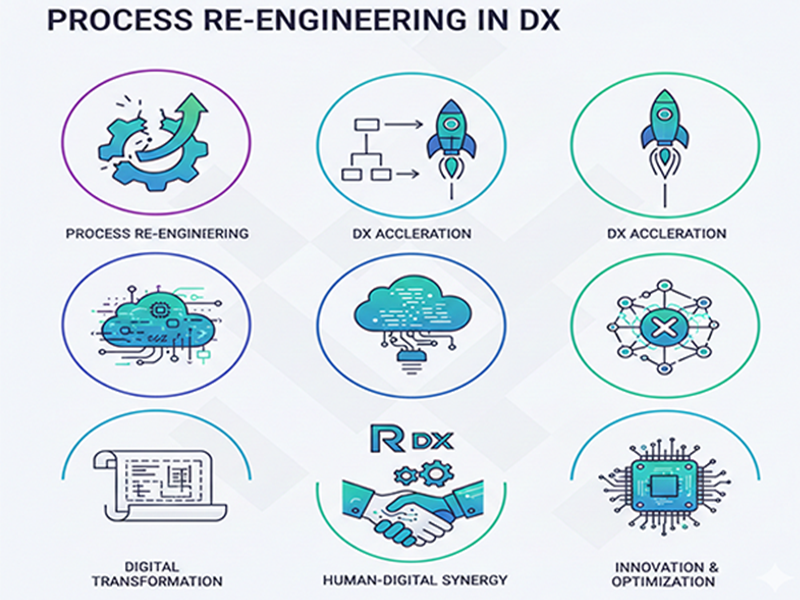
Process Re-Engineering in DX
Process
Re-Engineering (BPR) in the context of Digital Transformation (DX) is the
radical redesign of core business workflows to achieve dramatic improvements in
productivity, cycle times, and quality. In 2026, it is considered a
foundational step prior to digital technology implementation to ensure
organizations do not simply "automate the old" but instead create
entirely new, tech-enabled ways of working.
Principles of BPR in DX
- Organize Around Outcomes: Focus on the final result
(e.g., a processed loan) rather than individual tasks or departments.
- Abolish, Don’t Automate: Challenges existing
traditions by asking if a process is even necessary before applying
technology.
- Capture Information Once: Use digital tools to
collect data at the source to eliminate manual reentry and errors.
- Empower Decisions at the Point
of Action: Shift
decision-making authority to frontline employees, supported by real-time
data and AI.
- Merge Parallel Activities: Use digital platforms to
allow different departments to work simultaneously rather than waiting for
serial hand-offs.
The 2026
Process Re-Engineering Roadmap
1.
Envision and Identify: Map the "As-Is" state and identify
high-impact processes that act as bottlenecks.
2.
Radical Redesign ("To-Be"): Create a new workflow from scratch, integrating
modern technologies like AI, Cloud, and Robotic Process Automation
(RPA) to drive efficiency.
3.
Digital Integration: Use no-code platforms and Business Process Management Systems
(BPMS) to quickly model and deploy new workflows.
4.
Operationalize & Implement: Train employees on new digital roles and transition
away from legacy paper-based or siloed systems.
5.
Monitor & Optimize: Continuously track Key Performance
Indicators (KPIs) and
use feedback loops for ongoing refinement.