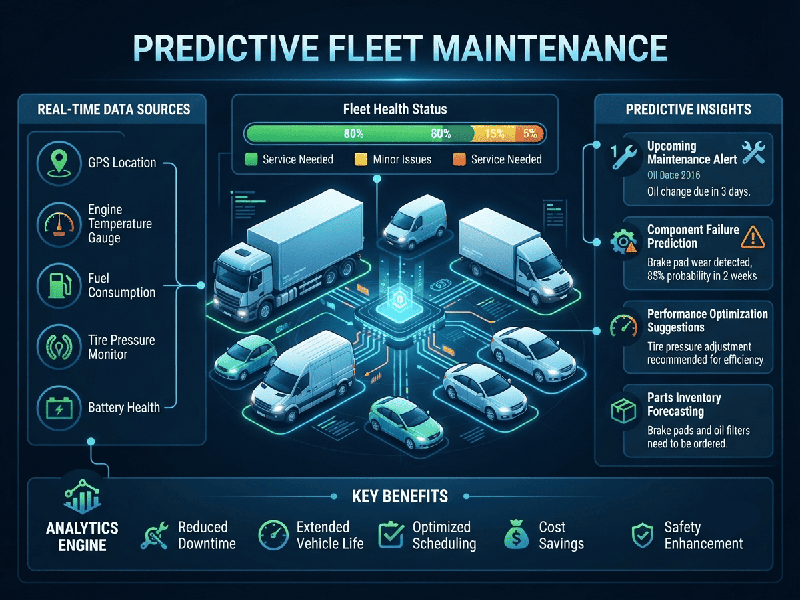
Predictive Fleet Maintenance
Predictive Fleet Maintenance is an advanced maintenance strategy
that uses real-time data, Internet of Things (IoT) sensors, telematics, and
machine learning (ML) algorithms to predict when a vehicle or component is
likely to fail—allowing mechanics to fix it before it breaks down.
Unlike traditional reactive maintenance (fixing things
after they break) or calendar/mileage-based preventive maintenance (servicing
at rigid intervals), predictive maintenance looks at the actual condition
of the vehicle.
How It Works
1.
Data Collection: IoT sensors and telematics systems installed on the vehicles
continuously monitor key parameters like engine temperature, fluid levels,
battery voltage, brake pad thickness, and tire pressure.
2.
Data Transmission & Storage: This continuous stream of operational data is securely
transmitted to a cloud-based fleet management platform.
3.
Analytics & AI Processing: Machine learning models analyze the data against historical
failure patterns to detect subtle anomalies or baseline deviations that human
eyes might miss.
4.
Actionable Alerts: When an issue is forecasted, the system automatically triggers an alert
or work order, enabling managers to schedule repairs during planned downtime.
Key Benefits
- Elimination of Unexpected
Breakdowns:
Drastically reduces roadside failures, keeping delivery schedules on track
and preventing supply chain delays.
- Lower Operating Costs: Prevents minor component wear
from escalating into catastrophic (and expensive) engine, transmission, or
electrical failures.
- Optimized Shop Visits: Allows managers to group
multiple minor repairs into a single scheduled appointment, minimizing
time spent out of service.
- Extended Asset Lifespan: Catching wear-and-tear early
preserves core components, maximizing the overall return on investment
(ROI) for every vehicle.
- Enhanced Safety: Proactively identifies critical
safety hazards—such as failing brakes or degraded steering
components—reducing accident risks and regulatory violations.