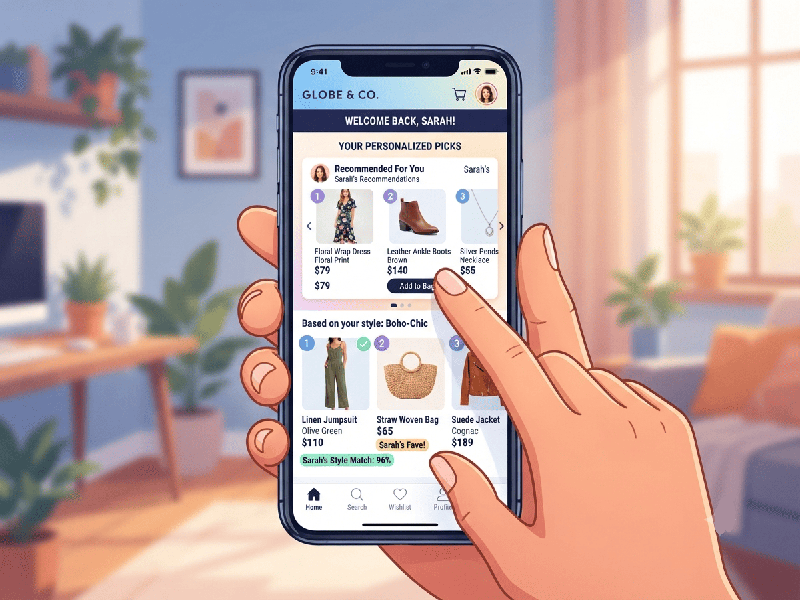
Personalization in Mobile Commerce
Personalization in mobile commerce (m-commerce) goes
beyond simply addressing a customer by name. It involves leveraging data—such
as browsing behavior, purchase history, real-time location, and device usage—to
deliver tailored shopping experiences across mobile apps and mobile-optimized
websites.
Because mobile screens are smaller and user attention
spans are shorter, delivering the right content to the right user at the exact
right moment is critical for conversion and retention.
Core Pillars of Mobile Commerce Personalization
- Dynamic Product Recommendations: Utilizing AI and machine
learning to display personalized product carousels (e.g., "Frequently
Bought Together," "Inspired by Your Browsing History," or
"Trending Near You").
- Behavioral Push Notifications: Sending timely, context-aware
alerts based on user actions, such as abandoned cart reminders, price drop
alerts for wishlisted items, or back-in-stock notifications.
- Location-Based Targeting: Using geofencing and GPS to
trigger location-specific offers, push notifications when a user is near a
physical store, or localized currency and shipping details.
- Tailored UI/UX Layouts: Dynamically rearranging the app
or mobile site homepage to highlight categories, brands, or seasonal
products that align with the individual user's past interactions.
- Personalized Search &
Navigation: Auto-completing
search queries based on past searches and prioritizing search results that
match the user's historical sizing, brand preferences, or price range.
Best Practices for Implementation
- Prioritize Privacy and
Transparency:
Clearly communicate how user data (like location or browsing habits) is
collected and used, ensuring compliance with regulations like GDPR and
local data protection laws.
- Optimize for Speed: Ensure that personalized
elements (like recommendation engines) load asynchronously so they do not
slow down mobile page performance.
- Maintain Omnichannel
Consistency: Ensure
that personalization data syncs seamlessly across the mobile app, mobile
web, desktop, and in-store touchpoints.
- A/B Test Relentlessly: Continuously test the frequency
of push notifications, the placement of recommendation modules, and the
messaging of dynamic offers to find the optimal balance without
overwhelming the user.