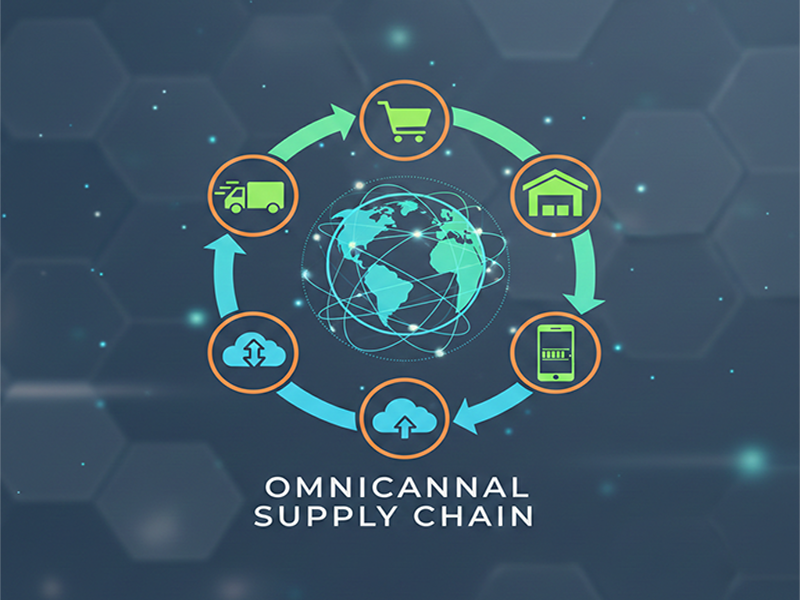
Omnichannel Supply Chain
Omnichannel Supply Chain management is no longer
just about being "everywhere"—it is about creating a single,
unified inventory pool that serves all sales channels
(brick-and-mortar, e-commerce, social commerce, and marketplaces) seamlessly.
1. Key
Pillars of Modern Omnichannel Logistics
- Inventory Visibility: Real-time tracking across
warehouses, transit, and retail shelves. You cannot sell what you can't
see; tools like Oracle NetSuite or SAP S/4HANA provide
this "single pane of glass."
- Distributed Order Management
(DOM):
Intelligent software that decides the best fulfillment point for an order
based on proximity, shipping cost, and stock levels.
- Unified Commerce: Integrating the front-end
(what the customer sees) with the back-end (logistics) so a customer can
buy online and return in-store without friction.
2.
Essential Fulfillment Strategies
- BOPIS (Buy Online, Pick Up
In-Store):
Turns retail locations into mini-distribution centers, reducing
"last-mile" shipping costs.
- Ship-from-Store: Utilizing store stock to
fulfill web orders, which speeds up delivery and prevents inventory from
sitting stagnant.
- Dark Stores: Converting underperforming
retail spaces into local fulfillment hubs dedicated solely to online
orders.
- Micro-Fulfillment Centers (MFCs): Small, highly automated
warehouses located in urban areas to enable sub-2-hour delivery.
3.
Emerging Trends (2025–2026)
- Predictive Stocking: Using AI to forecast demand at
a hyper-local level, moving inventory to specific neighborhoods before the
orders are even placed.
- Circular Omnichannel: Integrating
"Re-commerce" (returns and trade-ins) into the supply chain to
support sustainability goals and recover value from returned goods.
- Autonomous Last-Mile: Increasing reliance on
delivery drones and sidewalk robots for short-distance urban fulfillment
to combat rising labor costs.
4. Major
Challenges to Solve
- Channel Conflict: Ensuring that web sales don't
"steal" inventory needed for high-traffic physical store days.
- Reverse Logistics: Managing the high cost of
returns, which can reach 30% for online fashion. Solutions like Loop
Returns help automate and optimize this.
- Data Silos: Overcoming the
"legacy" problem where the online warehouse and the retail
warehouse use different software.