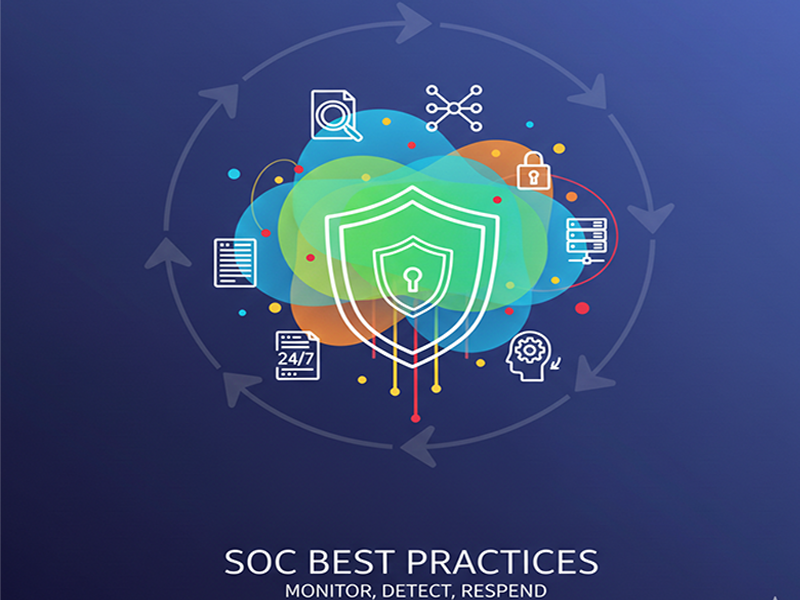
SOC Best Practices
Implementing
a Security Operations Center (SOC) in 2025 and 2026 requires a shift from
reactive monitoring to a proactive, AI-driven strategy. Modern best practices
focus on reducing alert fatigue, integrating cloud-native visibility, and
moving from activity-based metrics to outcome-driven results.
1.
Strategy & Governance
- Align with Business Goals: Define SOC objectives based on
what the company values most, such as protecting customer trust,
intellectual property, or ensuring regulatory compliance (GDPR, HIPAA).
- Adopt Industry Frameworks: Use established standards
like NIST CSF or the MITRE ATT&CK Matrix to
structure your detection and response capabilities.
- Transition to
"Outcome-Driven" Metrics: Instead of just counting closed tickets, measure what
truly matters to the board: Mean Time to Detect (MTTD), Mean
Time to Respond (MTTR), and reduced business disruption.
2.
Technology & Visibility
- Enable Full-Stack Visibility: Consolidate telemetry from
endpoints, networks, identity platforms, and multi-cloud workloads into a
single "source of truth" to eliminate blind spots.
- Deploy AI-Native Tools: Modern SOCs utilize AI-powered
SIEM and SOAR platforms to automate Tier-1 triage. This can
reduce false positives by up to 40%.
- Prioritize XDR and Zero Trust: Implement Extended
Detection and Response (XDR) for unified analytics and a Zero
Trust architecture to prevent lateral movement after an initial
breach.
3.
Proactive Operations
- Continuous Threat Hunting: Don’t wait for alerts.
Dedicate time weekly for analysts to search for hidden threats that may
have bypassed traditional security controls.
- Shift-Left Security: Collaborate with IT and
development teams to build security controls into systems before they
reach production.
- Incident Response Playbooks: Develop and regularly update
scenario-specific playbooks (e.g., for ransomware or phishing). These
should be tested quarterly through tabletop exercises.
4. People
& Continuous Improvement
- Cross-Train Diverse Teams: Include talent from diverse
backgrounds, such as data scientists and behavioral analysts, to approach
threats from multiple angles.
- Invest in Talent Retention: Prevent burnout by automating
the "grunt work" (repetitive triage) and providing dedicated
time for skill development and advanced certifications.
- Post-Incident Learning: Every major incident should
end with a "post-mortem" review to capture lessons learned and
update detection rules to prevent recurrence.