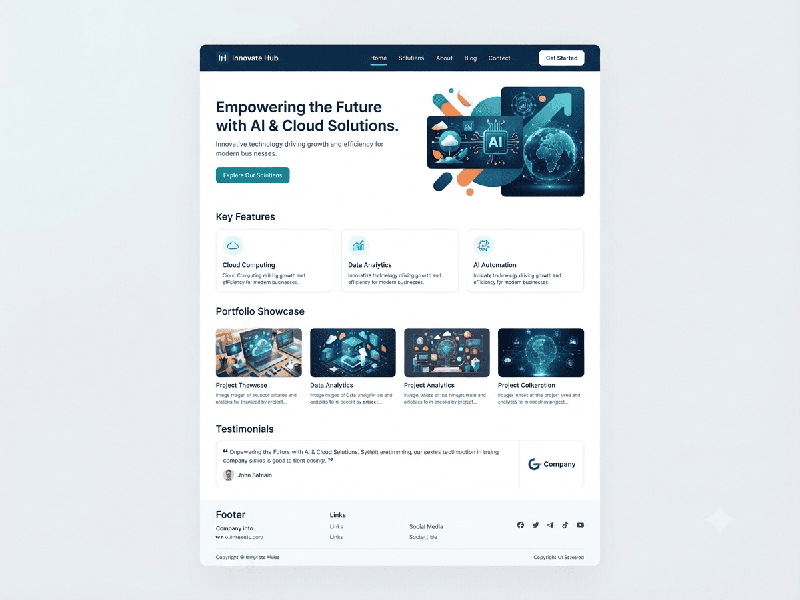
Modern Homepage Layout Structures
Modern homepage design moves away from rigid,
text-heavy grids toward dynamic, modular layouts that prioritize user intent,
storytelling, and rapid conversion. The goal is to guide visitors seamlessly
from initial curiosity to a clear call-to-action (CTA).
Core Modern Layout Patterns
- The Hero-Centric Layout
o Structure: Features a bold, high-impact
above-the-fold section containing a compelling headline, a subheadline, a
primary CTA, and a supporting visual (hero image, video background, or product
illustration).
o Best For: SaaS platforms, single-product
e-commerce brands, and service providers looking to communicate their core
value proposition in under three seconds.
- The Modular / Bento Grid Layout
o Structure: Inspired by Japanese bento boxes,
this layout divides the page into a grid of distinct, asymmetrical rectangular
cards of varying sizes. Each card highlights a specific feature, statistic,
testimonial, or product category.
o Best For: Tech companies, portfolios, and
multi-feature products wanting to showcase diverse offerings without
overwhelming the user.
- The Asymmetric & Diagonal
Split-Screen Layout
o Structure: Splits the viewport vertically or
diagonally into two distinct content zones—typically text and branding on one
side, and rich imagery or interactive previews on the other.
o Best For: Creative agencies, luxury brands,
and storytelling-driven businesses aiming for a modern, high-fashion aesthetic.
- The Long-Form Narrative /
Scrollytelling Layout
o Structure: Uses a linear, story-driven flow
where users scroll down to reveal animations, progressive disclosures, and
step-by-step product narratives.
o Best For: Complex B2B solutions, high-end
consumer products, and brands with an immersive origin or operational story.
- The Card-Based & Feeds
Layout
o Structure: Organizes content into uniform or
masonry grid cards that display previews, headlines, and metadata.
o Best For: Content-heavy sites, digital
directories, publishers, and marketplaces (such as listings or resource hubs).