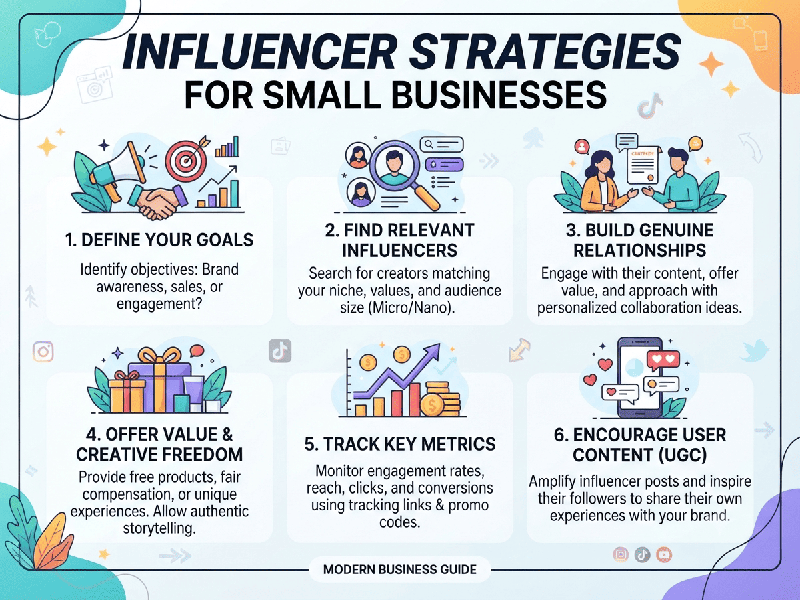
Influencer Strategies for Small Businesses
1. The Core Strategy: Micro & Nano Influencers
For small businesses with limited marketing budgets,
targeting massive macro-influencers (100k+ followers) is rarely cost-effective.
Instead, focus on micro-influencers (10k to 50k followers) and nano-influencers
(1k to 10k followers).
- Higher Engagement Rates: Nano and micro-influencers
typically see significantly higher engagement rates (often 3% to 8%+)
compared to mega-influencers, meaning their audiences are genuinely
listening.
- Niche Authority: They often have deeply loyal,
highly targeted communities centered around specific interests, local
regions, or specific lifestyles.
- Cost-Effectiveness: Partnerships can often be
secured through gifted products, affiliate commissions, or modest flat
fees rather than expensive retainers.
2. Actionable Campaign Types for Small Businesses
A. Hyper-Local & Community Marketing
- How it works: Partner with creators who
physically live and operate within your immediate geographic service area
or city.
- Best for: Local retail stores,
restaurants, cafes, boutique fitness studios, and service providers.
- Execution: Invite them in for an exclusive
experience, a complimentary service, or a tasting event in exchange for
authentic Instagram Stories, Reels, or TikTok walkthroughs.
B. Gifting & Unboxing Campaigns (Product Seedings)
- How it works: Send a personalized package of
your products to carefully vetted creators with no strings attached (no
guaranteed post required upfront, though you can include a polite note
expressing hope that they like it).
- Best for: Direct-to-consumer (D2C)
brands, artisanal goods, beauty products, and specialty food items (such
as organic food brands).
- Execution: If the product quality and
packaging are exceptional, many creators will organically review or
feature the unboxing on their stories.
C. Affiliate & Performance-Based Partnerships
- How it works: Provide creators with a unique
discount code or custom tracking link. They earn a percentage-based
commission on every sale generated through their code.
- Best for: E-commerce stores looking to
protect their marketing ROI.
- Execution: This aligns incentives—creators
are motivated to actively promote your product because their earnings
scale with their performance.
D. Co-Creation & Ambassador Programs
- How it works: Move away from one-off
sponsored posts and build ongoing relationships with 3 to 5 brand
advocates over a 3-to-6-month period.
- Best for: Building long-term brand trust
and recurring visibility.
- Execution: Task them with monthly content
drops, seasonal campaign features, or even co-creating a limited-edition
bundle or product flavor.
3. Step-by-Step Execution Checklist
1.
Define Your Audience Persona: Identify not just who buys your product, but who
influences their buying decisions. Look at your current customer base to
see who they already follow.
2.
Audit for Authenticity: Before reaching out, look at a creator's past posts. Check
their engagement quality—are the comments genuine conversations or just
generic, bot-like emojis?
3.
Draft a Personalized Outreach Pitch: Avoid copy-paste DM templates. Mention a specific
piece of content they posted recently that you loved, explain why they are a
great fit for your brand, and clearly state what's in it for them (value
exchange).
4.
Provide Creative Freedom: While clear brand guidelines (like mentioning key product
benefits or tagging handles) are essential, let creators film in their natural
style. Over-scripted ads perform poorly because audiences tune them out.
5.
Track Metrics Beyond Vanity Likes: Focus on meaningful KPIs such as promo code redemptions,
profile visits, click-through rates (CTR), and actual sales
conversions rather than just follower counts.