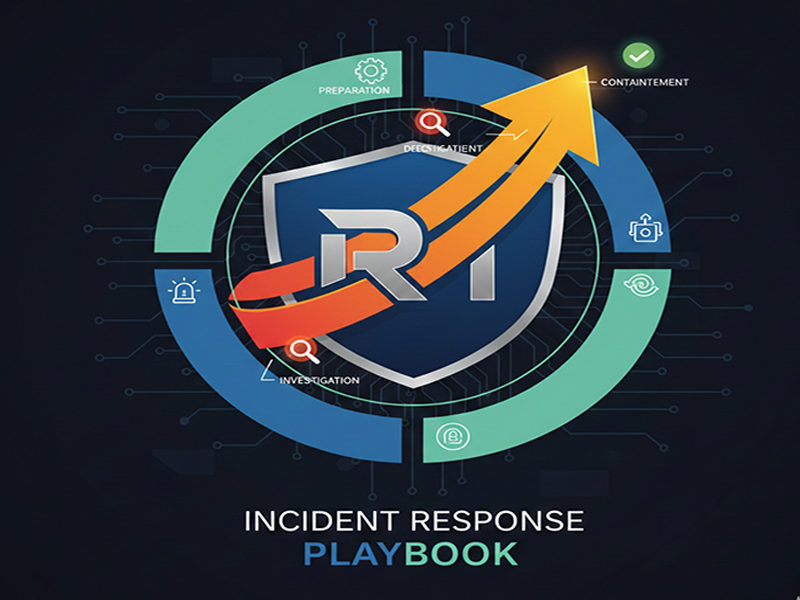
Incident Response Playbook
An incident
response (IR) playbook is a tactical, scenario-specific set of instructions
that translates an organization's high-level security strategy into immediate,
repeatable actions.
Core
Incident Response Phases
Modern
playbooks typically follow either the NIST (National Institute of Standards and Technology) or SANS
Institute frameworks:
1.
Preparation:
Setting up the tools, training, and team structure before an incident occurs.
2.
Detection & Identification: Identifying suspicious activity via SIEM or EDR/XDR alerts and confirming it is a true positive.
3.
Containment:
Limiting the spread of the attack (e.g., isolating affected network segments or
disabling compromised accounts).
4.
Eradication:
Removing the root cause of the incident, such as deleting malware or patching
vulnerabilities.
5.
Recovery:
Restoring affected systems to normal operation from clean, verified backups.
6.
Post-Incident Activity: Conducting a "Lessons Learned" review to improve
future defenses.
Key
Components of a Playbook
- Initiating Triggers: Specific conditions or alerts
that activate the playbook.
- Defined Roles: Clear authority for the
Incident Commander, technical leads, and communication officers.
- Escalation Protocols: Triggers for notifying legal
counsel, PR, or executive leadership.
- Communication Plan: Pre-defined templates
and out-of-band channels to use if the primary
network is compromised.
- Automated Response Actions: Scripted workflows for
"machine-speed" responses, such as auto-blocking malicious IPs.