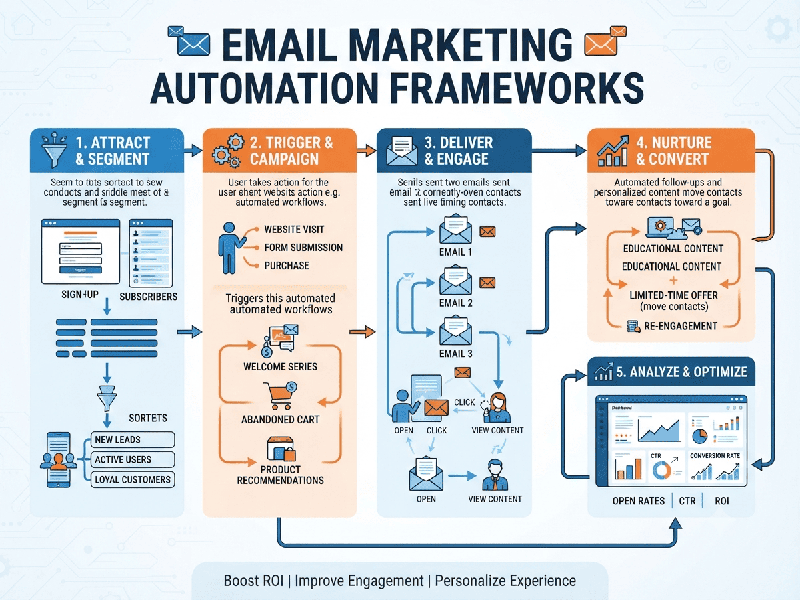
Email Marketing Automation Frameworks
Email Marketing Automation Frameworks are structured systems and strategic
blueprints used to design, trigger, and manage targeted email campaigns based
on specific user behaviors, timelines, or demographic data. Moving away from
manual, one-off broadcast emails, these frameworks ensure the right message
reaches the right audience segment automatically without constant human
intervention.
Core Components of an Email Automation Framework
1.
Trigger Events (The "When")
o Actions or milestones that initiate
an automated sequence. Triggers can include user sign-ups, cart abandonment, a
recent purchase, a downloaded resource, or website inactivity.
2.
Audience Segmentation (The "Who")
o Dividing the contact database into
precise groups based on buyer personas, purchase history, geographic location,
engagement levels, or lifecycle stage to ensure relevance.
3.
Workflow Logic & Decision Trees (The "If/Then")
o Conditional paths that dictate what
happens next. For example: If the recipient opens Email 1 and clicks the
link, send Email 2A (Product Pitch); if they do not open, wait three
days and send Email 2B (Re-engagement).
4.
Dynamic Content & Personalization (The "What")
o Automated insertion of custom
details—such as the recipient's first name, local currency symbols (like ₹ for
regional audiences), past purchase history, or tailored product
recommendations.
5.
Performance Tracking & Analytics (The "How Well")
o Continuous monitoring of key
performance indicators (KPIs) including open rates, click-through rates (CTR),
conversion rates, and unsubscribe rates to refine the framework over time.
Essential Automated Email Workflows
- Welcome Series: Nurtures new subscribers or
customers, introduces brand value, sets expectations, and often delivers
an initial incentive.
- Abandoned Cart / Browse
Recovery: Automatically
reminds prospective buyers about items left in their shopping cart or
viewed on the site, overcoming hesitation with timely nudges.
- Post-Purchase & Onboarding: Guides customers through
product setup, shares best practices, requests reviews, and cross-sells or
up-sells complementary offerings.
- Re-engagement / Win-Back
Campaigns:
Targets inactive subscribers who haven't opened emails or made a purchase
in a specified timeframe to revive interest or clean the database.