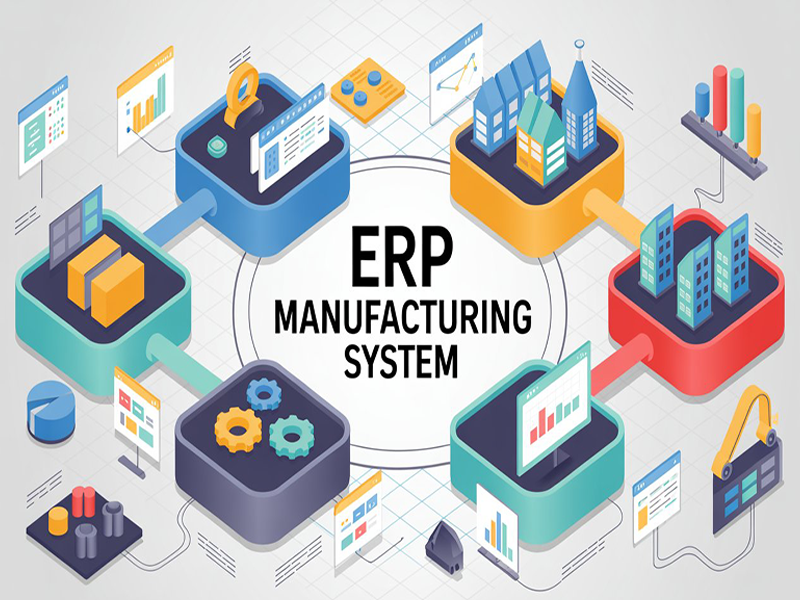
ERP for Manufacturing
Manufacturing
ERP (Enterprise Resource Planning) systems have evolved from passive
record-keeping tools into AI-driven "systems of action".
These platforms act as a digital backbone, integrating core production
workflows with finance, HR, and supply chain management into a single real-time
database.
Top
Manufacturing ERP Systems for 2026
The market
is segmented by business size and manufacturing complexity:
- SAP S/4HANA: The "industrial
powerhouse" for large global enterprises. It features Joule
AI for intelligent automation and "digital twin"
integration to simulate production scenarios.
- Oracle NetSuite: A leading cloud-native
choice for mid-market growth. New for 2026 is "Ask
Oracle," a conversational AI that allows executives to query
supply chain data using plain language.
- Microsoft Dynamics 365: Best for "Smart
Factories" leveraging Industry 4.0. It integrates deeply with Azure
IoT Hub and uses HoloLens for mixed-reality work
instructions on the shop floor.
- Epicor Kinetic: The specialist for
discrete, make-to-order (MTO), and engineer-to-order (ETO) environments.
It excels in complex product configuration and shop-floor monitoring.
- Acumatica Cloud ERP: Popular for mid-sized
manufacturers due to its unique consumption-based pricing,
which allows for unlimited users without extra costs.
Core
Manufacturing-Specific Features
- Advanced Planning &
Scheduling (APS): Automated tools that optimize resource allocation and machine
capacity in real time.
- Bill of Materials (BOM) &
CAD Integration: Seamlessly
transfers complex product designs from engineering software into
production lists.
- Shop Floor Control (SFC): Tracks labor reporting,
material usage, and machine downtime directly from the production line.
- Traceability & Compliance: Automated lot and serial
number tracking, essential for highly regulated sectors like automotive,
aerospace, and pharmaceuticals.