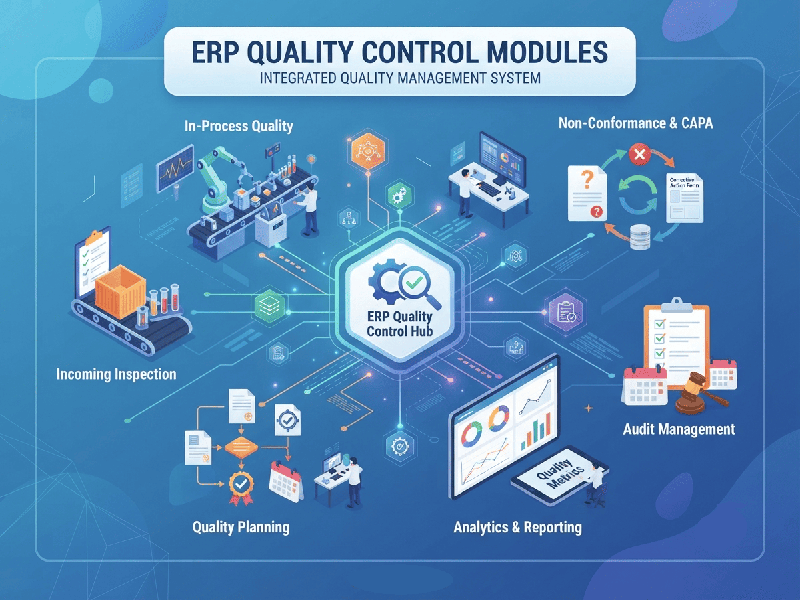
ERP Quality Control Modules
ERP Quality Control (QC) Modules are integrated software systems that
embed rigorous inspection, testing, and compliance protocols directly into an
organization’s core enterprise resource planning workflows.
By tying quality checks to procurement, manufacturing,
inventory, and sales processes, these modules ensure that raw materials,
work-in-progress (WIP), and finished goods meet strict internal standards and
regulatory requirements before reaching customers.
Core Functional Pillars
Modern ERP quality management modules handle the
entire lifecycle of quality assurance through several interconnected stages:
- Incoming Inspection (Procurement
QC): Validates
raw materials and components from suppliers against predefined purchase
order specifications as soon as goods arrive at the warehouse or loading
dock.
- In-Process Inspection
(Production QC):
Performs quality checks at critical control points during manufacturing
runs to catch assembly errors or machine drifts early, preventing massive
defective batches.
- Final Inspection & Packaging
QC: Conducts
rigorous pre-shipment tests on finished products to certify that items are
fully functional, correctly packaged, and labeled prior to dispatch.
- Certificate of Analysis (CoA)
Generation: Automatically
generates and stores compliance certificates required for shipments,
particularly critical for regulated sectors like food, pharmaceuticals,
and industrial chemicals.
Key Features & Capabilities
- Automated Quality Triggers: Automatically places incoming
inventory or production orders on temporary hold (quarantine) until
inspection results are officially logged and approved.
- Specification & Tolerance
Management: Stores
precise measurement ranges, chemical compositions, physical tolerances,
and pass/fail criteria for every item SKU.
- Non-Conformance Management
(NCR): Tracks
defective materials or failed batches, triggers root-cause investigations,
and initiates corrective/preventive actions (CAPA).
- Vendor Quality Rating (VQR): Evaluates supplier performance
over time based on incoming rejection rates, delivery accuracy, and defect
frequency to inform procurement decisions.