Customer Journey Mapping
Core
Components of a Map
- Customer Personas: Detailed profiles
representing your target audience segments.
- Journey Stages: The chronological phases a
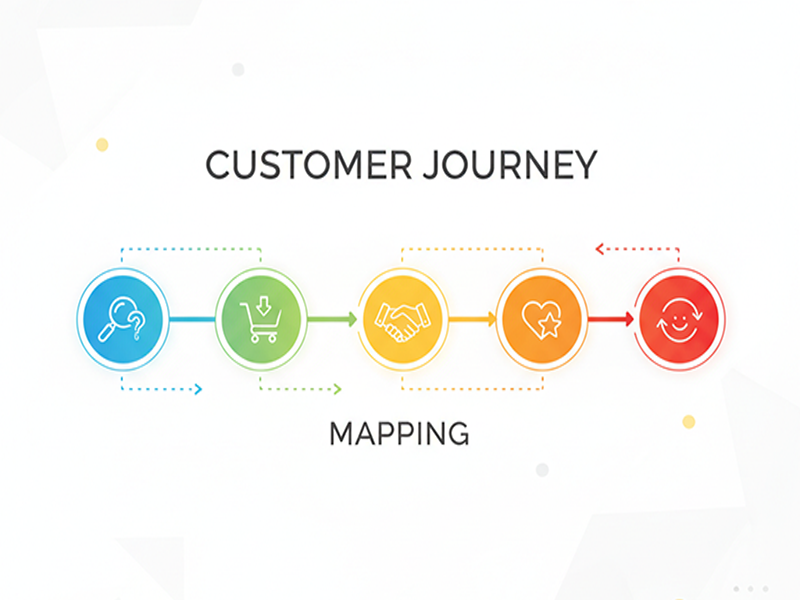
customer moves through, typically:
1.
Awareness: Discovering
the brand or recognizing a need.
2.
Consideration: Researching
and comparing options.
3.
Purchase/Decision: Completing the transaction.
4.
Retention/Onboarding: Initial usage and relationship building.
5.
Advocacy: Recommending
the brand to others.
- Touchpoints: Specific interaction
points, such as social media ads, website visits, or customer support
calls.
- Customer Actions: The physical steps a
customer takes at each stage.
- Emotions and Mindsets: How the customer feels
(e.g., excited, frustrated, or confused) during interactions.
- Pain Points: Roadblocks or challenges
that hinder a smooth experience.
- Opportunities: Actionable insights for
improvements or innovation.
Steps to
Create a Customer Journey Map
1.
Set Clear Objectives: Define what you want to achieve (e.g., reduce churn or improve
onboarding).
2.
Gather Data: Use
a mix of quantitative (analytics) and qualitative (interviews, surveys)
research.
3.
Define Personas: Focus on one specific persona at a time to keep the map detailed
and relevant.
4.
Map Touchpoints and Channels: List every place customers connect with your brand.
5.
Plot the Journey: Visualize the steps, adding rows for actions, thoughts, and
emotions.
6.
Identify Friction and Opportunities: Highlight where customers struggle and
brainstorm solutions.
7.
Validate and Refine: Test the map with real customers and internal teams to ensure
accuracy.
Key
Benefits
- Improved Retention: Identifying post-purchase
gaps helps prevent churn.
- Internal Alignment: Breaks down silos between
marketing, sales, and support by creating a shared vision.
- Personalization: Enables brands to deliver
more relevant experiences tailored to specific customer needs.
- Faster Sales Cycles: Removing friction at
decision points can significantly speed up conversions.