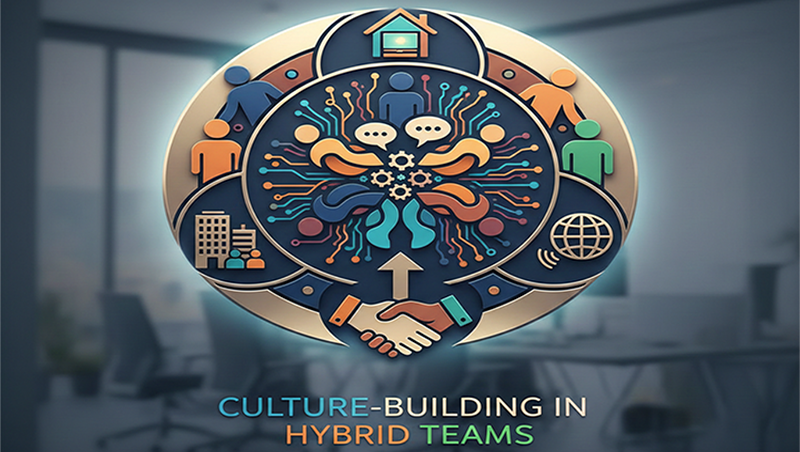
Culture-Building in Hybrid Teams
Building
culture in hybrid teams in 2026 requires moving beyond accidental interactions
to intentional design. In a hybrid environment, culture is no
longer defined by office layout or perks, but by shared trust, consistent
communication habits, and a unified sense of purpose regardless of
location.
1.
Establish Inclusive Communication Norms
- Remote-First Mentality: Design communication for
those not in the room. Always include a virtual link in
calendar invites and ensure every in-office participant in a meeting has
their own camera/laptop on to level the playing field.
- Codify Etiquette: Define clear team norms
for response times, which channels to use (e.g., Slack for chats, email for formal updates), and how to
manage "side conversations" in the office so remote workers stay
informed.
- Asynchronous Balance: Shift status updates to
asynchronous formats (like recorded videos or shared docs) to respect
focus time and different schedules, reserving "live" time for
deep collaboration and social bonding.
2.
Reinforce Shared Values and Purpose
- Visible Mission: Explicitly connect daily
tasks to the company’s core values during all-hands meetings and 1:1
check-ins.
- Culture Champions: Identify and reward
employees who naturally foster connection, such as those organizing
virtual coffee chats or mentoring new hires.
- Equitable Growth: Audit promotion and
recognition processes to eliminate proximity bias—the tendency
to favor those physically present in the office.
3. Foster
Intentional Social Connection
- Structured Rituals: Replace spontaneous
"watercooler" moments with planned activities like virtual
"no-agenda" coffee breaks, interest-based Slack channels (e.g.,
#pets, #cooking), or monthly "Together Days" for in-person
brainstorming.
- Meaningful Onboarding: Use "buddy
systems" and mentorship programs to connect new hires with tenured
staff immediately, ensuring they feel the "visceral experience"
of the culture from day one.
- Psychological Safety: Leaders should model
vulnerability and host regular "sentiment checks" to address
feelings of isolation or burnout before they lead to disengagement.
4.
Optimize the Physical and Digital Workspace
- The Office as a "Culture
Hub": Reenvision
the physical office not as a place for solitary desk work, but as a
"social anchor" designed for collaborative events,
team-building, and learning.
- Equitable Tech Access: Ensure all employees have
the same quality of equipment and access to collaborative tools (like Miro
or digital whiteboards) so location does not dictate the ability to
contribute.
5.
Continuously Measure and Adapt
- Pulse Surveys: Regularly gather anonymous
feedback specifically on the hybrid experience to identify "friction
points" like communication silos or meeting fatigue.
- Iterative Policy: Treat your hybrid model as
a "work in progress." Be willing to pivot rules based on data
and employee feedback to find the right balance of flexibility and
structure.