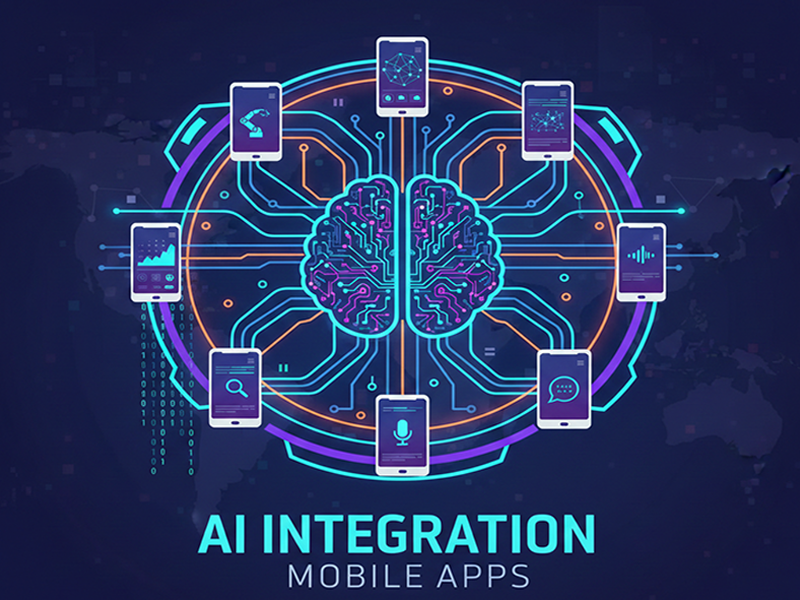
AI Integration in Mobile Apps
Integrating
AI into mobile applications is no longer just a futuristic trend; it has become
a standard for creating personalized, efficient, and engaging user experiences.
Whether you are looking to automate tasks or provide smarter insights, here is
a breakdown of how AI is transforming mobile apps today.
Core
Benefits of AI Integration
- Hyper-Personalization: AI analyzes user behavior
to provide tailored content, product recommendations, and notifications.
- Enhanced User Engagement: Features like chatbots and
voice assistants make apps more interactive and accessible.
- Operational Efficiency: Automating repetitive
tasks (like data entry or customer support) reduces costs and human error.
- Predictive Analytics: AI can forecast user
needs, such as suggesting a ride-share during a usual commute time or
predicting churn.
Implementation
Approaches
Depending on
your app's requirements, there are two primary ways to integrate AI:
1.
Cloud-Based AI (API-led)
Processing
happens on a remote server (e.g., OpenAI API, Google Cloud AI, AWS
SageMaker).
- Pros: High processing power,
handles complex models.
- Cons: Requires an internet
connection, potential latency, and API costs.
2.
On-Device AI (Edge Computing)
The AI model
runs directly on the smartphone using frameworks like CoreML (iOS)
or TensorFlow Lite (Android).
- Pros: Works offline, better
privacy (data doesn't leave the phone), zero latency.
- Cons: Limited by the phone's
battery and hardware power.
Key
Challenges to Consider
- Data Privacy: Handling sensitive user
data requires strict adherence to regulations like GDPR or CCPA.
- Battery Consumption: Complex AI models can
drain a device's battery quickly if not optimized.
- Data Quality: AI is only as good as the
data it is trained on. Biased or poor-quality data leads to poor app
performance.
- Development Cost: Building custom models can
be expensive and requires specialized talent (Data Scientists/ML
Engineers).
How to
Get Started
1.
Define the Problem: Don't add AI for the sake of it. Identify a specific user pain
point it can solve.
2.
Choose the Right Stack: Decide between ready-to-use APIs (like OpenAI) or
building custom models using Python and ML libraries.
3.
Start with an MVP: Integrate one AI-driven feature (e.g., a smart search bar) before
expanding to more complex systems.