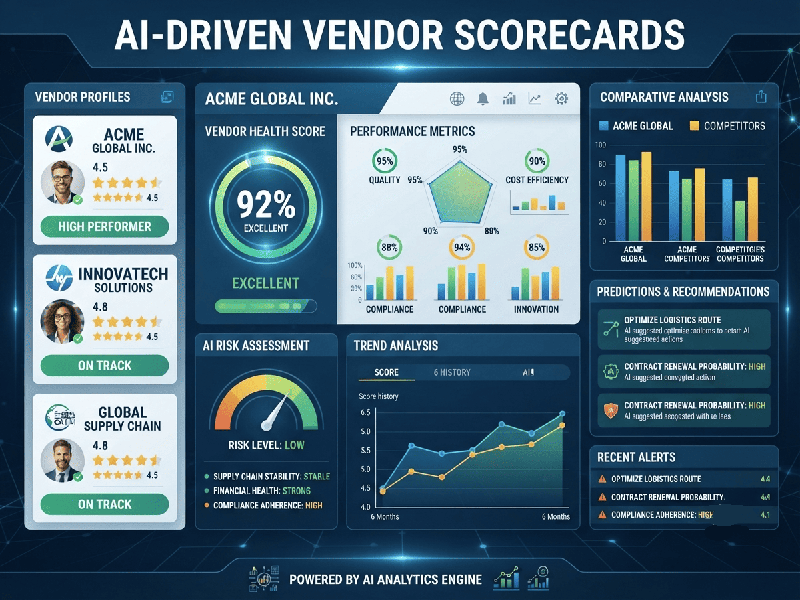
AI-Driven Vendor Scorecards
Transitioning from traditional, spreadsheet-based
vendor reviews to AI-Driven Vendor Scorecards allows organizations to
evaluate supplier performance dynamically, eliminate human bias, and predict
supply chain risks before they disrupt operations.
The core framework, essential metrics, and best
practices for implementing an AI-driven vendor scorecard system include:
1. Core Architecture of an AI-Driven Scorecard
An intelligent scorecard system automates data
aggregation across disparate systems (ERP, CRM, WMS, and communication
channels) to continuously score vendors across key performance pillars:
- Automated Data Ingestion: Pulls real-time data points
(invoice matches, shipment tracking, defect logs, and communication
response times) without manual data entry.
- Dynamic Weighting: Automatically adjusts KPI
weights based on the vendor category (e.g., delivery reliability is
weighted heavier for direct material suppliers, whereas data security or
uptime is prioritized for SaaS vendors).
- Predictive Analytics Layer: Uses machine learning models to look beyond historical performance, forecasting future risks such as potential delivery delays, financial distress, or quality slippage.
2. Best Practices for Implementation
* Leverage AI for Unstructured Data (NLP)*
Traditional scorecards only capture hard numbers.
AI-driven scorecards utilize Natural Language Processing (NLP) to parse
unstructured data—such as reading email threads, meeting transcripts, and
support tickets—to gauge sentiment analysis and communication quality
objectively.
* Move from Reactive Grading to Predictive Warning*
Instead of waiting for quarterly or annual reviews to
penalize a failing vendor, configure machine learning anomaly detection to flag
micro-trends (e.g., a gradual 3% increase in lead times week-over-week) so your
team can intervene before a contract breach occurs.
* Implement Tiered Vendor Segmentation*
Do not apply a one-size-fits-all scorecard to every
supplier. Segment your vendor base using AI clustering into strategic partners,
preferred suppliers, and transactional vendors, applying customized scorecard
criteria and thresholds to each tier.
* Maintain Transparency and Two-Way Feedback*
An AI scorecard should act as a collaborative growth roadmap rather than a punitive black box. Share real-time dashboards securely with your top vendors so they can view their performance scores, benchmark themselves against category averages, and correct operational bottlenecks proactively.