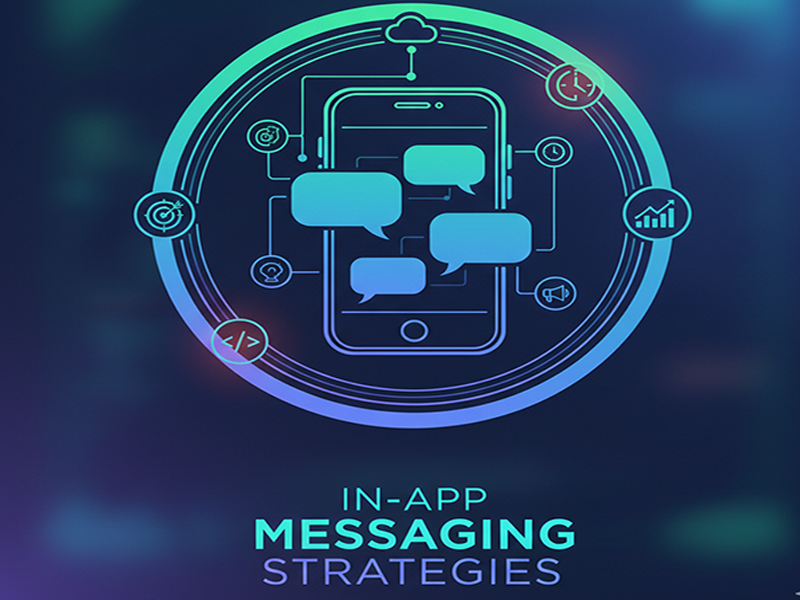
In-App Messaging Strategies
In 2026,
in-app messaging has shifted from being a "marketing tool" to a
"native product experience." Users now have zero tolerance for
disruptive pop-ups, leading to a strategy focused on Hyper-Contextual
relevance and Agentic AI.
1. The
Strategy Shift: From Pop-ups to "Nudges"
The old way
was to interrupt the user; the 2026 way is to assist the user.
- Contextual Triggers: Messages are no longer
scheduled; they are triggered by event sequences. If a user fumbles
with a feature for 10 seconds, a "Help Nudge" (tooltip) appears
automatically.
- Inline Messages: Instead of blocking the screen,
messages are embedded directly into the UI (e.g., a card in a feed) so
they feel like part of the app's content rather than an advertisement.
2.
Agentic AI & Conversational UI
In-app
messaging is now a two-way street.
- Interactive Conversational Bots: Most in-app messages are now
"Reply-able." If you send a feature announcement, the user can
ask, "How does this help me?" and an AI agent provides a
personalized explanation based on their usage history.
- Sentiment-Aware Delivery: AI analyzes the user's current
"vibe"—if they are moving quickly (transactional mode), messages
are silenced. If they are browsing slowly (discovery mode), educational
content is presented.
3. In-App
vs. Push: When to Use Which?
Understanding
the "boundary" between these two is critical for a cohesive
multi-channel strategy.
- Push Notifications (External): Use for re-engagement.
Their job is to pull a user who is not in the app back into it
(e.g., "Your driver is 2 minutes away").
- In-App Messaging (Internal): Use for retention. Their
job is to guide a user who is already active to a deeper level of
value (e.g., "New filter added to the editor").
4.
Technical Implementation Trends
If you are
building or updating your infrastructure, consider these 2026 trends:
- AI-Driven Flow Optimization: Using AI to predict the best
message format (banner vs. modal) for specific user segments.
- Two-Way Conversations: Moving away from one-way
"blasts" toward integrated chat support where users can reply
directly to an announcement.
- No-Code Flexibility: Marketing and Product teams are
now using tools like Braze, CleverTap, or Pendo to
launch messages without waiting for a developer sprint.