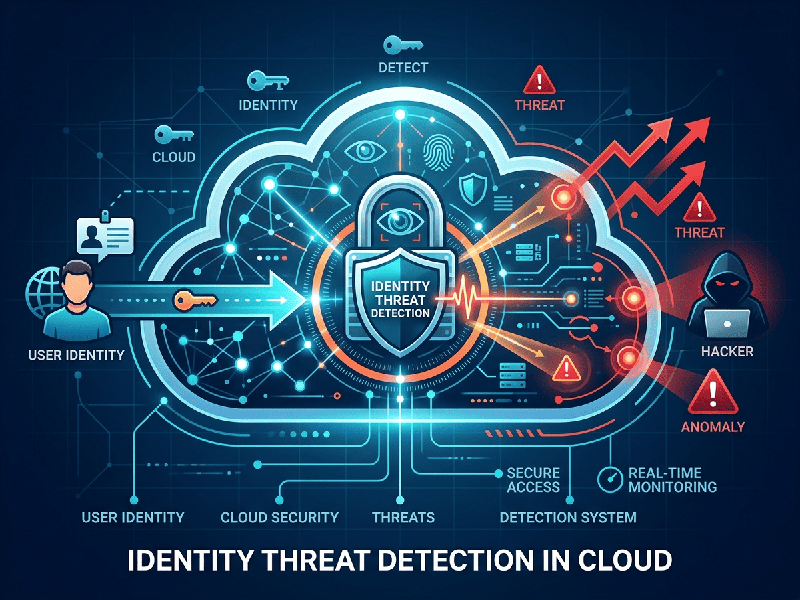
Identity Threat Detection in Cloud
Identity Threat Detection and Response (ITDR) in the cloud refers to security
capabilities specifically designed to monitor, detect, and respond to
identity-based risks and attacks targeting cloud infrastructure, SaaS
applications, and Identity Providers (IdPs) like Microsoft Entra ID, Okta, and
AWS IAM.
Because identity has replaced the traditional network
perimeter in cloud environments, ITDR fills the critical gap left by
traditional endpoints (EDR) and cloud security posture tools (CSPM) by treating
identity interactions as the primary surface area to monitor.
1. Identity Posture & Misconfiguration Management
Prevents attacks before they happen by continually
analyzing cloud identity hygiene:
- Over-Privileged Accounts &
Shadow Admins:
Identifies accounts with excessive permissions or implicit administrative
access.
- Non-Human Identity (NHI)
Monitoring:
Audits service principals, API keys, service accounts, and OAuth app
tokens for unused access or stale credentials.
- MFA Defeats & Legacy
Protocols: Detects
accounts lacking Multi-Factor Authentication or utilizing vulnerable
legacy authentication protocols (e.g., basic auth, older TLS).
2. Behavioral Analytics & Real-Time Threat
Detection
Leverages User and Entity Behavior Analytics (UEBA)
and threat intelligence to identify active compromises:
- Impossible Travel &
Anomalous Sign-ins: Detects logins from geographically distant locations within
unrealistic timeframes or from unfamiliar IP ranges/browsers.
- Session Hijacking & Token
Theft: Identifies
pass-the-cookie/token attacks where an attacker steals a valid session
cookie to bypass MFA.
- Illegitimate Consent Grants: Flags malicious OAuth
applications tricked into acquiring broad permissions to user mailboxes or
cloud storage.
- Privilege Escalation &
Persistence:
Alerts on unauthorized creation of backdoors, addition of secondary
credentials to service principals, or unexpected admin role assignments.
3. Automated & Dynamic Threat Response
Provides fast containment actions to minimize blast
radius without disrupting legitimate workflows:
- Active Session Revocation: Instantly invalidates refresh
tokens and active user sessions across all SaaS and cloud apps.
- Step-Up Authentication Triggers: Dynamically enforces step-up
MFA or Conditional Access policies when elevated risk is detected during a
session.
- Account Quarantine &
Password Resets:
Disables compromised accounts or forces password resets for affected
credentials.